


The quickest way to make tiny white bumps worse may be trying to remove them yourself. If you’re searching for how to get rid of milia, it makes sense to want a fast fix, especially when the bumps linger or resemble acne. But not every small bump is milia. Picking, scraping, or using harsh exfoliants can irritate your skin and leave marks.

This guide explains what milia may look like, how they differ from acne, and which gentle at-home habits are reasonable. You’ll also learn why home extraction isn’t a safe shortcut and when a dermatologist or qualified clinician may be a better next step, particularly if the bumps persist, change, or you’re unsure what they are. The goal is to protect your skin, not risk a quick fix.

Key Takeaways

  • Milia can resemble other skin bumps, so appearance alone may not confirm what you’re seeing.
  • Learn how to get rid of milia safely by choosing gentle care and avoiding at-home extraction.
  • Persistent, changing, or uncomfortable bumps are good reasons to seek assessment from a dermatologist or qualified clinician.
  • Skin Care Pro Group offers skincare services in Frederick and nearby Maryland communities, but does not confirm milia diagnosis or removal.

What Are Milia, and Why Can They Be Difficult to Remove?

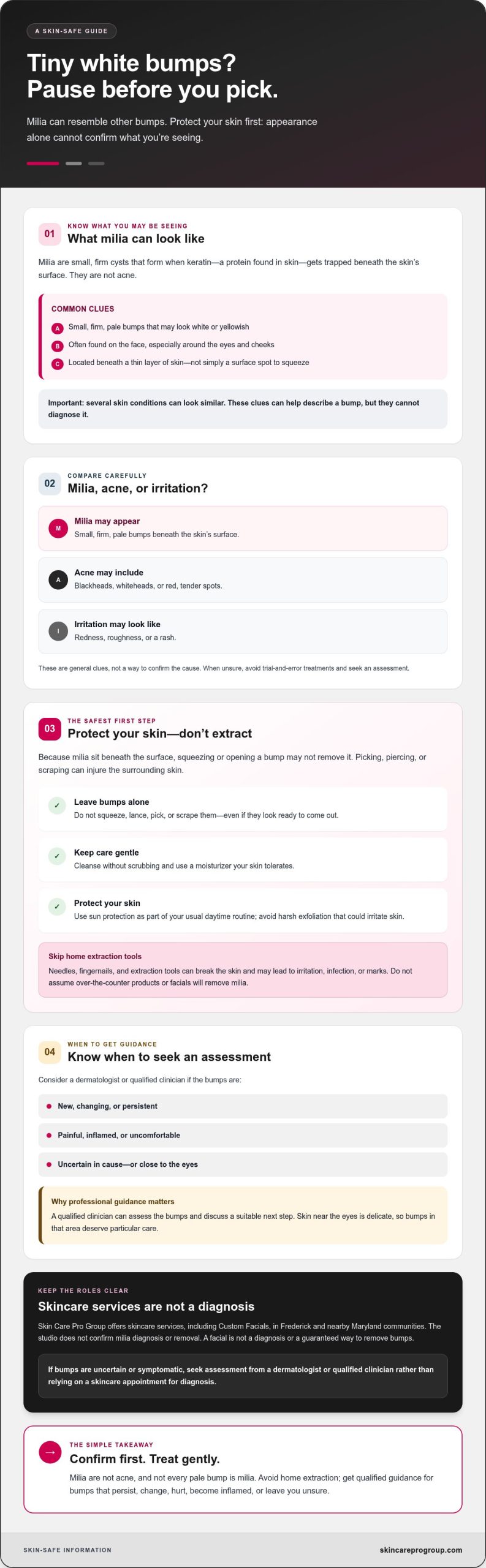
Milia are small, firm cysts that form when keratin, a protein found in skin, becomes trapped beneath its surface. They’re not acne: rather than developing from clogged pores, they sit under a thin layer of skin. The overview of What Are Milia explains their basic features and different types.

Milia often look like tiny white or yellowish bumps and commonly appear on the face, especially around the eyes and cheeks. Their size and firm feel may make them seem easy to identify, but other skin conditions can look similar. Appearance alone can’t confirm that a bump is milia.

Because the trapped material lies beneath the skin’s surface, squeezing or trying to open a bump may not remove it. That’s one reason searches for how to get rid of milia can lead to risky advice: methods intended for acne may not suit milia and can irritate or injure the skin.

How Can You Tell Milia From Other Small Bumps?

Milia are often small, firm, and pale. Acne may include blackheads, whiteheads, or red, tender spots, while irritation may appear as redness, roughness, or a rash. These clues can help you describe what you see, but they aren’t enough to diagnose the cause. Several conditions can produce similar-looking bumps.

Consider an assessment by a qualified clinician if the bumps are new, changing, painful, inflamed, or persistent, or if you’re unsure what’s causing them. A clinician can assess your skin and advise on an appropriate next step, rather than leaving you to rely on appearance or trial-and-error treatments at home.

How to Get Rid of Milia Safely: What to Do and What to Avoid

If you’re wondering how to get rid of milia, start with protecting your skin, not extracting the bumps. Milia sit beneath the skin’s surface, so squeezing or piercing them at home is not a safe shortcut. Needles, scraping, and picking can break the skin and lead to irritation, infection, or marks.

Keep your routine simple while you decide what to do next:

  • Leave the bumps alone. Don’t squeeze, lance, or scrape them, even if they look ready to come out.
  • Use a gentle routine. Cleanse without scrubbing, and use a moisturizer your skin tolerates.
  • Protect your skin. Use sun protection as part of your usual daytime routine, and avoid adding harsh exfoliation that could cause irritation.
  • Ask a clinician if you’re concerned. Seek guidance if you’re unsure what the bumps are or they persist, change, hurt, or become inflamed.

Can You Remove Milia at Home?

Don’t try to remove milia yourself with a needle, fingernails, or an extraction tool. Even careful attempts can injure the surrounding skin, and bumps that look like milia may have another cause. Don’t assume that over-the-counter products or facials will remove them. A qualified clinician can assess the bumps and discuss suitable options, including professional treatment for milia.

Skin Care Pro Group offers skincare services, including Custom Facials, but doesn’t confirm milia diagnosis or removal. For general skincare needs and to discuss whether a facial may suit your goals, review the appointment information. If you need a diagnosis or have concerning bumps, seek assessment from a qualified clinician.
When to Seek Professional Help for Milia in Frederick, Maryland

Consider seeing a dermatologist or qualified clinician if you’re unsure what a bump is, it persists or changes, or it becomes painful or inflamed. This is especially important for bumps close to the eyes, where skin is delicate. The American Academy of Ophthalmology offers guidance on milia around the eyes, but a clinician can assess your individual concern.

Choosing how to get rid of milia starts with confirming what the bumps may be. Skin Care Pro Group in Frederick serves nearby Maryland communities, including Walkersville, Hagerstown, and Urbana, and offers skincare services such as Custom Facials. The studio doesn’t confirm milia diagnosis or removal. A facial may be worth discussing for broader skincare goals, but it shouldn’t be treated as a diagnosis or a guaranteed way to remove bumps.

What Should You Ask Before Booking a Skincare Appointment?

Describe what you’ve noticed, including where the bumps are and whether they’ve changed or become uncomfortable. Ask whether the provider can discuss your general skincare needs, whether a Custom Facial may be suitable, and whether they recommend medical assessment first. If the bumps are uncertain or symptomatic, contact a dermatologist or qualified clinician rather than relying on a skincare appointment for diagnosis.

If you’re considering a skincare service in Frederick, ask whether it fits your goals and whether medical assessment should come first. You can review skincare appointment options when you’re ready to discuss general skincare needs.

Choose a Skin-Safe Next Step

The safest answer to how to get rid of milia begins with knowing what you’re treating. Milia aren’t acne, and bumps that are uncertain, changing, persistent, painful, or inflamed are best assessed by a dermatologist or qualified clinician. Avoid trying to extract them yourself. Gentle care can protect your skin while you decide what to do next.

Skin Care Pro Group serves Frederick, Walkersville, Hagerstown, and Urbana, Maryland, with Custom Facials and other skincare services. A facial may be worth discussing for broader skincare goals, but it isn’t a confirmed milia diagnosis or removal service, and results aren’t guaranteed.

For general skincare questions or to discuss whether a Custom Facial may suit your goals, contact Skin Care Pro Group. For medical assessment, reach out to a qualified clinician.

Frequently Asked Questions

Can you get rid of milia at home?

Don’t try to remove milia at home by squeezing, scraping, or puncturing them; these methods can injure or irritate skin. Gentle cleansing and moisturizing may support skin comfort, but may not clear existing bumps. If you’re searching how to get rid of milia and aren’t sure what the bumps are, or they persist, ask a qualified clinician.

Do milia go away on their own?

Some milia may go away on their own, but timing varies, and some bumps persist. Avoid picking or trying to speed up the process with tools or harsh products. If a bump changes, becomes uncomfortable, or continues to concern you, ask a qualified clinician to assess it rather than relying on photos or online descriptions.

Is milia the same as acne?

No. Milia are small cysts linked to trapped keratin, while acne involves clogged pores and inflammation. They may look alike to someone without clinical training, and irritation or other skin concerns can also cause small bumps. Since appearance alone can’t confirm the cause, ask a qualified clinician for guidance if you’re uncertain or the bumps change.

Can a facial remove milia?

A facial shouldn’t be assumed to remove milia. Skin Care Pro Group offers Custom Facials and other skincare services, but milia-specific diagnosis or removal isn’t confirmed. If you’re in Frederick, Walkersville, Hagerstown, or Urbana, Maryland, ask whether a Custom Facial fits your broader skincare goals. For diagnosis or treatment advice, consult a qualified clinician.

How to Get Rid of Milia: Safe, Skin-Friendly Steps

How to Get Rid of Milia: Safe, Skin-Friendly Steps

The quickest way to make tiny white bumps worse may be trying to remove them yourself. If you’re searching for how to get rid of milia, it makes sense to want a fast fix, especially when the bumps linger or resemble acne. But not every small bump is milia. Picking, scraping, or using harsh exfoliants can irritate your skin and leave marks.

This guide explains what milia may look like, how they differ from acne, and which gentle at-home habits are reasonable. You’ll also learn why home extraction isn’t a safe shortcut and when a dermatologist or qualified clinician may be a better next step, particularly if the bumps persist, change, or you’re unsure what they are. The goal is to protect your skin, not risk a quick fix.

Key Takeaways

  • Milia can resemble other skin bumps, so appearance alone may not confirm what you’re seeing.
  • Learn how to get rid of milia safely by choosing gentle care and avoiding at-home extraction.
  • Persistent, changing, or uncomfortable bumps are good reasons to seek assessment from a dermatologist or qualified clinician.
  • Skin Care Pro Group offers skincare services in Frederick and nearby Maryland communities, but does not confirm milia diagnosis or removal.

What Are Milia, and Why Can They Be Difficult to Remove?

Milia are small, firm cysts that form when keratin, a protein found in skin, becomes trapped beneath its surface. They’re not acne: rather than developing from clogged pores, they sit under a thin layer of skin. The overview of What Are Milia explains their basic features and different types.

Milia often look like tiny white or yellowish bumps and commonly appear on the face, especially around the eyes and cheeks. Their size and firm feel may make them seem easy to identify, but other skin conditions can look similar. Appearance alone can’t confirm that a bump is milia.

Because the trapped material lies beneath the skin’s surface, squeezing or trying to open a bump may not remove it. That’s one reason searches for how to get rid of milia can lead to risky advice: methods intended for acne may not suit milia and can irritate or injure the skin.

How Can You Tell Milia From Other Small Bumps?

Milia are often small, firm, and pale. Acne may include blackheads, whiteheads, or red, tender spots, while irritation may appear as redness, roughness, or a rash. These clues can help you describe what you see, but they aren’t enough to diagnose the cause. Several conditions can produce similar-looking bumps.

Consider an assessment by a qualified clinician if the bumps are new, changing, painful, inflamed, or persistent, or if you’re unsure what’s causing them. A clinician can assess your skin and advise on an appropriate next step, rather than leaving you to rely on appearance or trial-and-error treatments at home.

How to Get Rid of Milia Safely: What to Do and What to Avoid

If you’re wondering how to get rid of milia, start with protecting your skin, not extracting the bumps. Milia sit beneath the skin’s surface, so squeezing or piercing them at home is not a safe shortcut. Needles, scraping, and picking can break the skin and lead to irritation, infection, or marks.

Keep your routine simple while you decide what to do next:

  • Leave the bumps alone. Don’t squeeze, lance, or scrape them, even if they look ready to come out.
  • Use a gentle routine. Cleanse without scrubbing, and use a moisturizer your skin tolerates.
  • Protect your skin. Use sun protection as part of your usual daytime routine, and avoid adding harsh exfoliation that could cause irritation.
  • Ask a clinician if you’re concerned. Seek guidance if you’re unsure what the bumps are or they persist, change, hurt, or become inflamed.

Can You Remove Milia at Home?

Don’t try to remove milia yourself with a needle, fingernails, or an extraction tool. Even careful attempts can injure the surrounding skin, and bumps that look like milia may have another cause. Don’t assume that over-the-counter products or facials will remove them. A qualified clinician can assess the bumps and discuss suitable options, including professional treatment for milia.

Skin Care Pro Group offers skincare services, including Custom Facials, but doesn’t confirm milia diagnosis or removal. For general skincare needs and to discuss whether a facial may suit your goals, review the appointment information. If you need a diagnosis or have concerning bumps, seek assessment from a qualified clinician.

How to Get Rid of Milia: Safe, Skin-Friendly Steps

When to Seek Professional Help for Milia in Frederick, Maryland

Consider seeing a dermatologist or qualified clinician if you’re unsure what a bump is, it persists or changes, or it becomes painful or inflamed. This is especially important for bumps close to the eyes, where skin is delicate. The American Academy of Ophthalmology offers guidance on milia around the eyes, but a clinician can assess your individual concern.

Choosing how to get rid of milia starts with confirming what the bumps may be. Skin Care Pro Group in Frederick serves nearby Maryland communities, including Walkersville, Hagerstown, and Urbana, and offers skincare services such as Custom Facials. The studio doesn’t confirm milia diagnosis or removal. A facial may be worth discussing for broader skincare goals, but it shouldn’t be treated as a diagnosis or a guaranteed way to remove bumps.

What Should You Ask Before Booking a Skincare Appointment?

Describe what you’ve noticed, including where the bumps are and whether they’ve changed or become uncomfortable. Ask whether the provider can discuss your general skincare needs, whether a Custom Facial may be suitable, and whether they recommend medical assessment first. If the bumps are uncertain or symptomatic, contact a dermatologist or qualified clinician rather than relying on a skincare appointment for diagnosis.

If you’re considering a skincare service in Frederick, ask whether it fits your goals and whether medical assessment should come first. You can review skincare appointment options when you’re ready to discuss general skincare needs.

Choose a Skin-Safe Next Step

The safest answer to how to get rid of milia begins with knowing what you’re treating. Milia aren’t acne, and bumps that are uncertain, changing, persistent, painful, or inflamed are best assessed by a dermatologist or qualified clinician. Avoid trying to extract them yourself. Gentle care can protect your skin while you decide what to do next.

Skin Care Pro Group serves Frederick, Walkersville, Hagerstown, and Urbana, Maryland, with Custom Facials and other skincare services. A facial may be worth discussing for broader skincare goals, but it isn’t a confirmed milia diagnosis or removal service, and results aren’t guaranteed.

For general skincare questions or to discuss whether a Custom Facial may suit your goals, contact Skin Care Pro Group. For medical assessment, reach out to a qualified clinician.

Frequently Asked Questions

Can you get rid of milia at home?

Don’t try to remove milia at home by squeezing, scraping, or puncturing them; these methods can injure or irritate skin. Gentle cleansing and moisturizing may support skin comfort, but may not clear existing bumps. If you’re searching how to get rid of milia and aren’t sure what the bumps are, or they persist, ask a qualified clinician.

Do milia go away on their own?

Some milia may go away on their own, but timing varies, and some bumps persist. Avoid picking or trying to speed up the process with tools or harsh products. If a bump changes, becomes uncomfortable, or continues to concern you, ask a qualified clinician to assess it rather than relying on photos or online descriptions.

Is milia the same as acne?

No. Milia are small cysts linked to trapped keratin, while acne involves clogged pores and inflammation. They may look alike to someone without clinical training, and irritation or other skin concerns can also cause small bumps. Since appearance alone can’t confirm the cause, ask a qualified clinician for guidance if you’re uncertain or the bumps change.

Can a facial remove milia?

A facial shouldn’t be assumed to remove milia. Skin Care Pro Group offers Custom Facials and other skincare services, but milia-specific diagnosis or removal isn’t confirmed. If you’re in Frederick, Walkersville, Hagerstown, or Urbana, Maryland, ask whether a Custom Facial fits your broader skincare goals. For diagnosis or treatment advice, consult a qualified clinician.