

What’s the difference between peptides and hyaluronic acid in serums?
Products Skin Care Skincare IngredientsWhat’s the difference between peptides and hyaluronic acid in serums?
Just by understanding the ingredients in your skincare, you can make more informed decisions about what benefits your skin needs. Peptides and hyaluronic acid are popular serum components, each offering unique advantages. You’ll find peptides work to support your skin’s structure and firmness, while hyaluronic acid excels at deeply hydrating and plumping your skin. Knowing how these work will help you choose the right serum to enhance your skincare routine effectively.
Key Takeaways:
- Peptides are small chains of amino acids that help stimulate collagen production, improving skin firmness and reducing the appearance of fine lines and wrinkles.
- Hyaluronic acid is a powerful hydrating ingredient that attracts and retains moisture, plumping the skin and enhancing its smoothness and elasticity.
- While peptides focus on skin repair and anti-aging benefits, hyaluronic acid primarily provides hydration; combining them in a serum can offer both moisture and rejuvenation for healthier-looking skin.
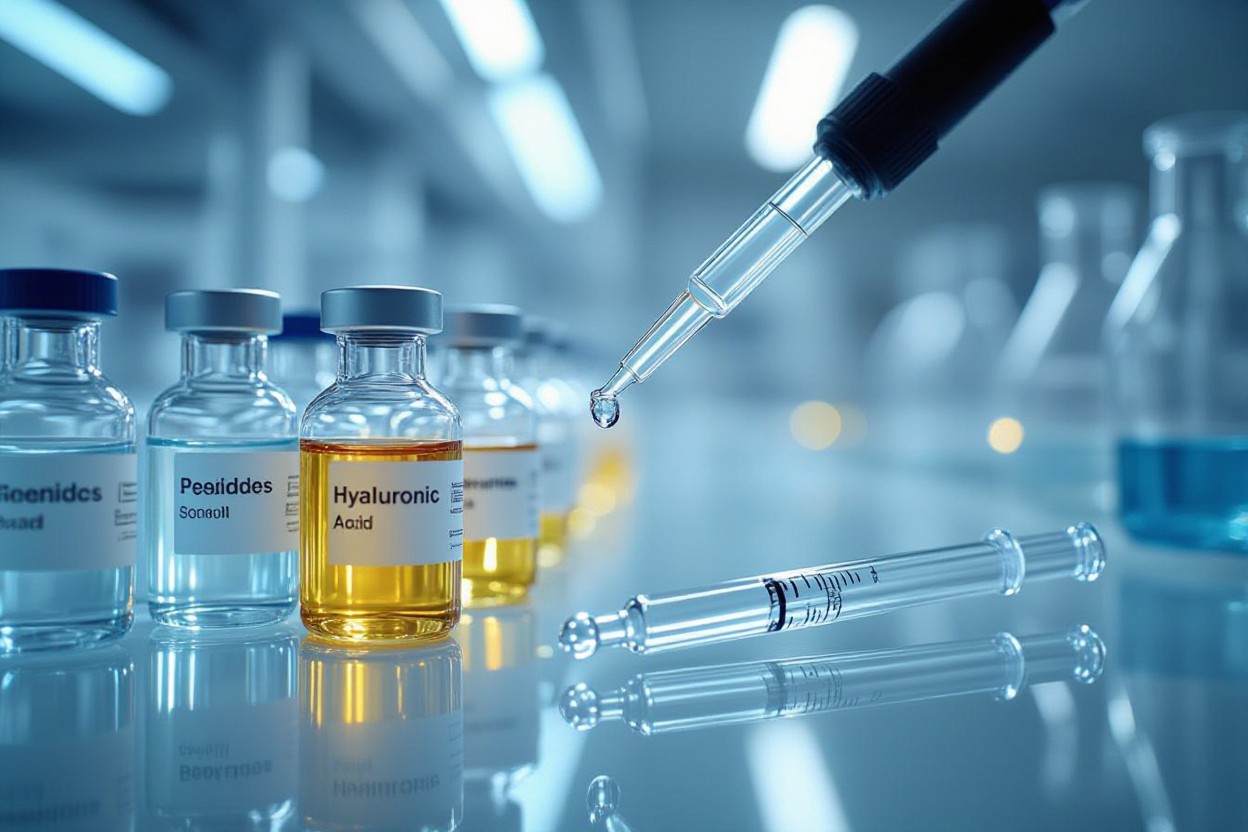
Peptides: The Building Blocks of Skin Health
Peptides are short chains of amino acids that signal your skin to perform specific functions like collagen production and repair. Integrating peptides into your skincare routine supports skin firmness and elasticity, making them ideal if you want to reduce the signs of aging or boost overall skin resilience. Serums with peptides deliver these molecules effectively, targeting fine lines and improving texture without irritation, suitable for most skin types seeking hydration and rejuvenation.
Types of Peptides and Their Functions
Different peptides serve unique roles in skincare:
- Signal peptides stimulate collagen and elastin production.
- Carrier peptides deliver trace elements like copper to boost healing.
- Neurotransmitter-inhibiting peptides reduce muscle contractions to minimize wrinkles.
- Enzyme-inhibiting peptides protect skin from breakdown.
- Structural peptides support the skin’s matrix and barrier function.
This variety allows you to choose a serum tailored to specific skin concerns.
| Peptide Type | Primary Function |
|---|---|
| Signal Peptides | Stimulate collagen and elastin synthesis for firmness |
| Carrier Peptides | Transport minerals like copper to accelerate wound healing |
| Neurotransmitter-Inhibiting Peptides | Relax facial muscles to reduce expression lines |
| Enzyme-Inhibiting Peptides | Prevent degradation of skin proteins to maintain structure |
| Structural Peptides | Support extracellular matrix for skin strength and elasticity |
Mechanisms of Action in Skincare
Peptides in serums penetrate the skin to mimic natural communication signals, prompting your cells to increase collagen and elastin production or reduce inflammation. Their small size allows deep absorption, unlike larger proteins, offering targeted improvements in skin texture and tone. Through such signaling, peptides can stimulate repair processes, enhance hydration by supporting barrier function, and calm irritated skin.
Beyond collagen stimulation, peptides influence multiple pathways: they can modulate growth factors, activate fibroblasts for tissue regeneration, and inhibit enzymes that degrade skin proteins. Clinical studies highlight peptides’ ability to visibly reduce wrinkle depth and improve elasticity after consistent use over 4-8 weeks. This makes peptide-enriched serums a scientifically backed choice for enhancing your skin’s structural integrity and youthful appearance over time.
Hyaluronic Acid: The Hydration Powerhouse
Hyaluronic acid excels at drawing moisture into your skin, holding up to 1,000 times its weight in water. In serum form, it penetrates deeply to provide intense hydration without heaviness, making it ideal for all skin types, especially those with dryness or sensitivity. Incorporating this ingredient can give your complexion a plump, dewy look while improving elasticity and smoothing fine lines by maintaining optimal moisture balance.
Understanding Its Role in Moisture Retention
Hyaluronic acid acts like a sponge, attracting water molecules and locking them within your skin’s outer layers. This prevents dehydration by forming a moisture barrier, which enhances skin softness and resilience. People exposed to dry climates or indoor heating often benefit from hyaluronic acid serums, as they help maintain consistent hydration, preventing tightness and flakiness.
The Science Behind Its Youth-Enhancing Properties
Hyaluronic acid encourages skin cell regeneration and repair, which supports a youthful texture and appearance. Its ability to maintain hydration reduces the look of fine lines and wrinkles by plumping skin tissues, helping to smooth out surface imperfections and improve skin firmness.
Scientific studies reveal that sustained hydration from hyaluronic acid stimulates fibroblast activity, the cells responsible for collagen and elastin production. Increased collagen synthesis promotes skin elasticity, reducing sagging and enhancing firmness over time. Regular use of hyaluronic acid serums not only replenishes moisture but also supports the structural integrity of your skin, making it a powerful component in anti-aging skincare routines.
Comparing Efficacy: Peptides vs. Hyaluronic Acid
| Peptides | Hyaluronic Acid |
|---|---|
| Stimulate collagen production, improving firmness and reducing fine lines over weeks to months. | Attract and retain moisture, instantly plumping skin and smoothing texture within hours. |
| Best for targeting signs of aging and skin repair at a cellular level. | Ideal for hydration and immediate skin surface smoothing, suitable for all skin types. |
| Typically slower to show visible results but delivers lasting rejuvenation. | Provides quick visual improvements, especially in dry or dull skin. |
Speed of Results: What the Research Shows
Hyaluronic acid’s ability to retain up to 1,000 times its weight in water delivers near-instant hydration and plumping effects, often noticeable within hours of application. Peptides, however, require consistent use over several weeks to stimulate collagen synthesis and visibly reduce fine lines, as studies indicate measurable improvements after 4 to 12 weeks. If you’re seeking rapid skin smoothness, hyaluronic acid serums offer immediate benefits, while peptides contribute more gradual, foundational changes.
Long-Term Benefits: Analyzing the Impact on Skin Aging
Peptides support your skin’s natural repair mechanisms, promoting collagen and elastin formation critical for maintaining firmness and elasticity as you age. Hyaluronic acid’s moisture-binding properties help maintain skin hydration, which slows down the appearance of wrinkles and guards against dryness-related surface damage over time. Using peptides and hyaluronic acid together in serums can amplify these complementary effects for both deep rejuvenation and surface hydration.
Long-term use of peptide serums can lead to measurable improvements in skin texture and resilience, supported by clinical trials showing up to a 30% increase in collagen synthesis after consistent application. Meanwhile, hyaluronic acid sustains skin hydration levels imperative for barrier function, reducing the severity of aging-related dryness and keeping skin supple. Combining both ingredients helps you address multiple aging factors simultaneously, optimizing your skin’s youthful appearance while maintaining moisture balance.
How Professional Grade Serums Elevate Skincare
Professional grade serums often contain higher concentrations of active ingredients like peptides and hyaluronic acid, designed to deliver targeted results. These formulas undergo rigorous testing to ensure stability, potency, and effectiveness, offering you visible improvements in hydration, firmness, and texture. When incorporated consistently, such serums can provide long-term benefits that over-the-counter products may not achieve, making them a valuable addition to your skincare routine for addressing signs of aging and dryness more efficiently. To learn more about the differences in selecting over the counter or professional formulations of serums, go to this article.
Concentration and Formulation Differences
You’ll find professional serums typically boast peptide levels between 2-5%, compared to 0.5-1% in standard products, allowing for more pronounced collagen stimulation. Similarly, hyaluronic acid in higher molecular weights enhances hydration on multiple skin layers. These formulations often combine complementary ingredients that boost absorption and efficacy, rather than relying on a single active, creating synergistic effects to maximize your skin’s rejuvenation and moisture retention.
The Importance of Delivery Systems in Serum Efficacy
Advanced delivery systems in professional serums enhance the penetration of peptides and hyaluronic acid into the deeper layers of your skin. Technologies like liposomes, microcapsules, and nanoemulsions protect these delicate molecules from degradation and ensure they reach their intended targets efficiently. This targeted delivery improves the overall effectiveness, producing more noticeable results in hydration and skin firmness than serums lacking such systems.
Delivery systems like liposomes encapsulate peptides within tiny lipid spheres, facilitating passage through the skin’s barrier and protecting actives from oxidation. Nanoemulsions break down hyaluronic acid into minute droplets, increasing absorption speed and hydration longevity. Clinical studies have shown serums employing these technologies can increase active ingredient uptake by up to 60%, resulting in plumper, smoother skin after consistent use. Such innovations mean your serum isn’t just sitting on the surface but actively transforming your skin from within.
Expert Insights: Choosing Between Peptides and Hyaluronic Acid
You’ll find peptides excel at stimulating collagen synthesis, making them ideal if your goal is to target fine lines and improve skin elasticity. Hyaluronic acid, known for its remarkable hydration properties, suits anyone looking to boost moisture levels and plump the skin instantly. Selecting between them depends on your skin’s needs—peptides for anti-aging and structural support, hyaluronic acid for powerful hydration and softness. Both deliver well in serum form, as their concentrated formulas enhance absorption deep into the skin for noticeable, targeted results.
Tailoring Your Skincare Routine to Your Skin Type
If your skin tends to be dry or dehydrated, incorporating a hyaluronic acid serum can provide the moisture boost crucial for maintaining suppleness and preventing flakiness. Conversely, those with aging or mature skin may benefit more from peptide serums that encourage collagen production and reduce the appearance of wrinkles. Sensitive skin types often tolerate hyaluronic acid well, while peptides can sometimes cause irritation depending on their complexity. Understanding your skin’s specific concerns will help you optimize the effects of these potent ingredients.
The Synergistic Potential of Combining Both Ingredients
Using peptides and hyaluronic acid together in your skincare routine leverages their complementary benefits—peptides support long-term skin structure by stimulating collagen, while hyaluronic acid hydrates and plumps immediately. This combination enhances overall skin health by addressing multiple layers, promoting resilience and a youthful glow simultaneously.
Layering peptides with hyaluronic acid creates a synergy where hydration maximizes the peptides’ ability to penetrate and function effectively. Clinical studies indicate that well-hydrated skin responds better to collagen-stimulating ingredients, accelerating visible improvements in texture and firmness. You might notice smoother, more elastic skin quicker when both ingredients are present, as the hydration barrier protects peptides from degradation and aids sustained release. This targeted approach suits many skin types, especially those seeking both moisture and anti-aging benefits without overwhelming the skin.
To wrap up
Now, when choosing between peptides and hyaluronic acid in serums, it helps to understand their distinct roles: peptides support your skin’s natural collagen production, promoting firmness and reducing fine lines, while hyaluronic acid deeply hydrates by attracting and retaining moisture, giving your skin a plump, smooth appearance. Depending on your skin’s needs—whether you want to improve texture, combat aging, or boost hydration—you can select a serum with one or both ingredients to enhance your skincare routine effectively.
These are some of the most recent professional grade serums that we have evaluated, and incorporated into or treatments. We consider these to be top of the line and a reasonable price for the quality.
If you are interested in learning more about these, you can go and also purchase them if you want at the Le Mieux website.

LeMieux Vita C Serum, TGF-B Booster Serum, Hyaluronic Acid Serum
FAQ
Q: What are the main differences between peptides and hyaluronic acid in serums?
A: Peptides are short chains of amino acids that help signal the skin to produce more collagen and elastin, promoting firmness and reducing fine lines. Hyaluronic acid, on the other hand, is a powerful humectant that attracts and retains moisture in the skin, providing intense hydration and plumping effect. While peptides focus more on skin repair and anti-aging, hyaluronic acid primarily enhances skin hydration and texture.
Q: Who should use peptides versus hyaluronic acid in their skincare routine?
A: Peptides are best suited for individuals looking to improve skin elasticity, reduce wrinkles, and support natural collagen production, making them great for aging or mature skin. Hyaluronic acid is beneficial for all skin types, especially those with dry or dehydrated skin, as it boosts moisture levels without feeling heavy or greasy. Many people choose to use both together to address multiple skin concerns.
Q: Why is it effective to use peptides and hyaluronic acid in serum form?
A: Serums are lightweight liquids that contain a high concentration of active ingredients, allowing deeper and quicker absorption into the skin. Using peptides and hyaluronic acid in serum form ensures these ingredients penetrate more effectively, enhancing their benefits. This format also allows for layering with other products and targets specific skin concerns without feeling heavy or clogging pores.