

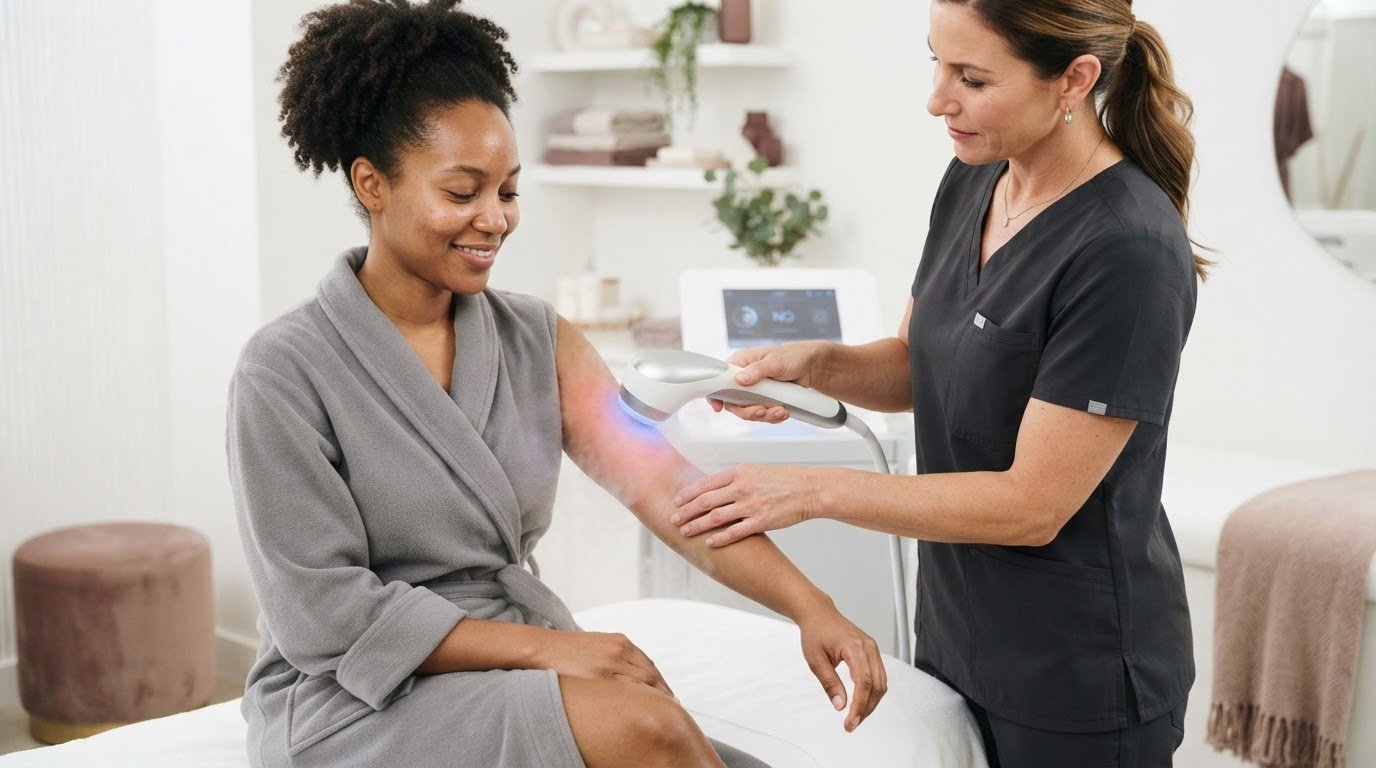
Cold is only half the story. Having cryoskin technology explained in plain English starts with its temperature cycle: the treatment warms the skin to around 40°C, then cools the targeted area. The aim is to influence the appearance of body contours and skin tone without surgery.

Cryoskin technology explained: controlled temperature changes may raise questions about firmness, facial appearance, and safety. Before deciding whether it fits your self-care routine, look beyond polished before-and-after images. This guide explains how Cryoskin works, what its treatment types aim to address, how to assess changes over time, and what health considerations to keep in mind. Understanding the technology and its limits can help you weigh whether it suits your goals.

Key Takeaways

  • Cryoskin sessions vary by treatment, and the recommended spacing matters. Learn how timing differs for slimming and toning.
  • Cryo toning is designed to target the appearance of firmness and texture through controlled cooling, not to replace a broader skincare routine.
  • Facial treatments have their own considerations, including how recent cosmetic procedures can affect suitability.
  • For skin concerns that call for a tailored approach, a custom facial can help focus care on your skin’s current needs.

Is Cryoskin A Safe Treatment?

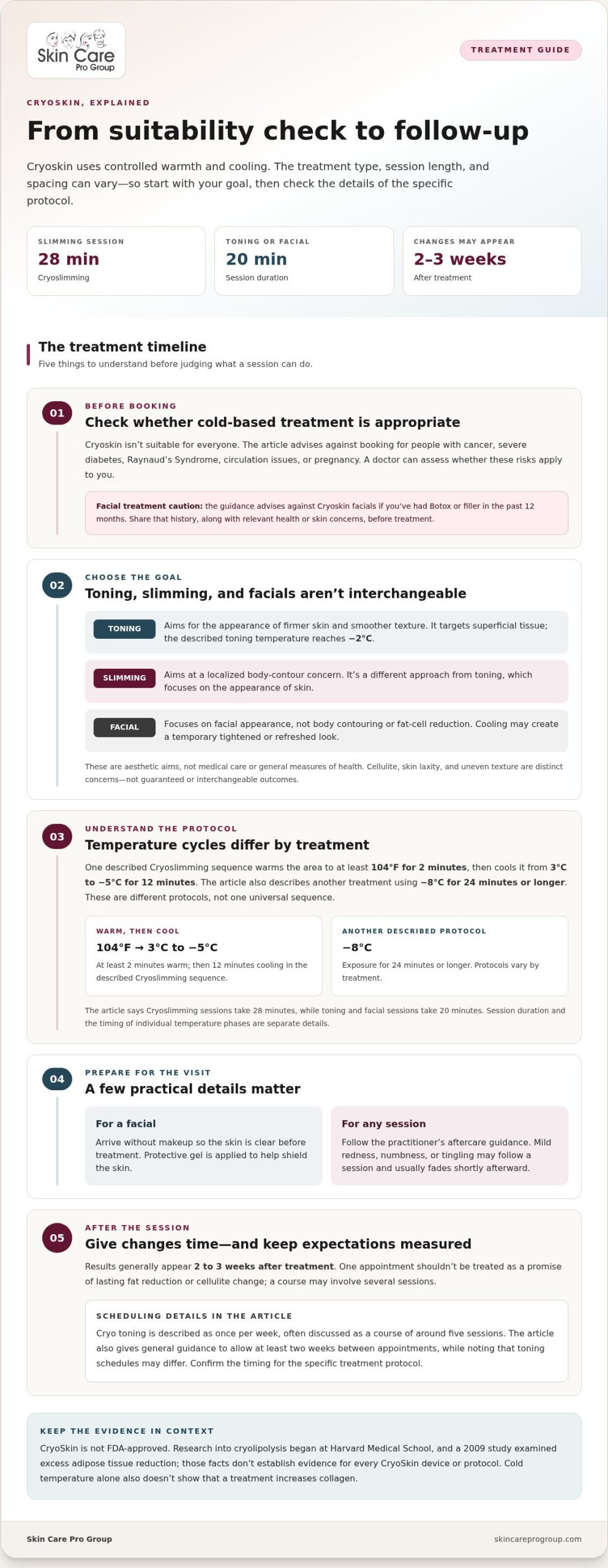
Cryoskin uses controlled temperature changes, but cold-based treatments aren’t suitable for everyone. People with cancer, severe diabetes, Raynaud’s Syndrome, circulation issues, or pregnancy are advised not to book. A doctor can assess whether these risks apply. Mild redness, numbness, or tingling may follow a session and usually fades shortly afterward.

Protocols vary. One Cryoslimming sequence warms the area to at least 104°F for 2 minutes, then cools it from 3°C to -5°C for 12 minutes. Another described treatment exposes the area to -8°C for 24 minutes or longer. Cryoslimming takes 28 minutes; toning and facial sessions take 20 minutes. Results generally appear 2 to 3 weeks after treatment. Arms are one cited treatment area, and a course may involve several sessions, rather than one visit promising lasting fat reduction or cellulite change.

How does Cryoskin compare with CoolSculpting, cryotherapy, and other body-contouring treatments? Cryoskin uses alternating warmth and cooling. Cryotherapy refers to cold exposure, while body-contouring treatments use different technologies and approaches.

Is CryoSkin FDA-cleared or supported by clinical research? CryoSkin is not FDA-approved. Research into cryolipolysis began at Harvard Medical School, and a 2009 study examined excess adipose tissue reduction; those facts don’t establish evidence for every CryoSkin device or protocol.

How much does CryoSkin treatment cost in the United States? The price depends on the treatment area, session type, and planned course, and is given after a quote request. Before a session, arrive without makeup for facial treatment; protective gel is applied to help shield the skin. Follow the practitioner’s aftercare guidance, and allow at least two weeks between appointments; toning schedules may differ.

Cryo toning for skin firmness and texture

Cryo toning uses controlled cooling to target superficial tissue, reaching -2°C. Its aesthetic aim is firmer-looking skin and smoother texture, rather than the focused fat reduction associated with slimming. That distinction matters: toning addresses the appearance of skin, while slimming targets body contour. Neither should be treated as a substitute for medical care or a general measure of health.

Collagen provides structural support to skin, which is why it often comes up in discussions about firmness and aging. However, cold temperature alone doesn’t show that a treatment increases collagen. Cryo toning is a temperature-based treatment aimed at a visible change in skin appearance. Cellulite, laxity, and uneven texture are distinct concerns, not interchangeable outcomes.

For Cryoskin toning, the recommended schedule is once per week. A course is often discussed as around five sessions, with changes developing over time rather than lasting after one appointment. The lymphatic system is also mentioned in body treatments, but lymphatic drainage techniques are separate from cooling. They don’t make a toning session a slimming treatment or guarantee a particular result.

Choose a treatment based on the concern you want to address. If your priority is skin firmness or texture, toning is the relevant category; for a localized contour concern, slimming is a different approach. Don’t assume that suction used in other aesthetic treatments is part of Cryoskin toning. Clear expectations help you decide whether a temperature-based treatment fits your goal.

Facial cryotherapy and aesthetics

A Cryoskin facial is a non-invasive, temperature-based treatment focused on facial appearance, not body contouring or fat-cell reduction. The facial session lasts 20 minutes. Cooling may create a temporary tightened or refreshed look, but that immediate appearance isn’t proof of lasting structural change. Claims about collagen production should be treated carefully; the treatment’s temperature alone doesn’t establish that collagen levels increase.

Facial cryotherapy differs from whole-body cryotherapy because it targets the face rather than exposing the entire body to cold. In Cryoskin toning, superficial tissue can be cooled to -2°C. That figure describes a toning treatment, not a universal temperature for every facial protocol. The effects depend on the treatment method and the skin concern being addressed, so a facial session shouldn’t be framed as equivalent to fat-freezing or a way to remove facial fat cells.

Preparation is straightforward: arrive without makeup so the skin is clear before treatment. A specific caution applies to facial aesthetics: the guidance advises against Cryoskin facials for people who have had Botox or filler in the past 12 months. Share that history before booking, and discuss any relevant skin or health concerns with a doctor. Those details matter more than expecting a quick fix during an anti-aging journey.

If you’re considering facial cooling, focus on the goal: a temporary refreshed appearance, rather than invasive contouring or guaranteed collagen changes. Explore facial treatment appointments to find a suitable next step for your skincare needs.
Skin Care Pro Group: Custom Facial

If your main concern is facial skincare rather than body contouring, Skin Care Pro Group’s Custom Facial in Frederick, Maryland, offers a personalized option. The treatment can focus on your skin’s current needs, whether you want routine care or are concerned about a change in texture or appearance.

Other options include The ‘Pro’ Facial, microdermabrasion, and dermaplaning. The right fit depends on your skin and the outcome you have in mind, not on which treatment sounds most intensive. If you’re unsure where to start, share your priorities with Skin Care Pro Group. You’re also welcome to visit skincareprogroup.com.

Choose Your Next Step With Confidence

With cryoskin technology explained, consider what you want from a skincare treatment. Is your priority facial appearance, skin texture, or body contouring? Keeping your goal in mind helps you compare options without expecting one treatment to address every concern.

Consider which approach fits your skincare priorities and comfort level. Skin Care Pro Group offers facial treatments for people whose goals call for a different approach.

Contact Skin Care Pro Group to discuss your skincare goals and possible next steps. A thoughtful choice is a good place to begin.

Frequently Asked Questions

How Does Cryoskin Work?

A Cryoskin session applies a device-based protocol to a selected area for aesthetic purposes. Before treatment, clarify which area will be addressed and what change you hope to see. That keeps the discussion focused on your goal, rather than treating “Cryoskin” as one identical procedure for everyone.

What Are The Benefits Of Cryoskin?

Cryoskin is used for aesthetic goals, so start by naming the change you care about most. You might be focused on the appearance of a particular body area, your face, or your skin’s texture. Being specific helps define what to assess afterward and whether this treatment fits your priorities.

When Will I See The Results?

Use a consistent method to assess changes instead of relying on memory. Before treatment, note the area you’re focusing on and take a photo in similar lighting and posture. Compare it later under the same conditions. This won’t predict the outcome, but it can help you judge gradual visual changes without overinterpreting day-to-day differences.

What Are The Different Types of Cryoskin?

The main options are called Cryoskin Slimming, Cryoskin Toning, and Cryoskin Facial. To compare them, describe the area and appearance you want to address, then match your goal to the relevant treatment category. A facial concern calls for a different discussion than a body-area concern.

What Are the Side Effects of Cryoskin?

Tell the practitioner about any discomfort or skin changes that concern you after treatment, especially if they persist or worsen. Note when they began and how they change so you can describe what happened clearly. If you have a health condition that could affect cold exposure, discuss suitability with your doctor before booking.

Maria-The Lioness

Article by

Maria-The Lioness

Skin care and makeup mentor and teacher in Frederick, MD who loves to learn what really works and helps a person glow and be skin healthy without aggressive treatments. Baby boomer woman, mother, and grandmother out to share what I wish I knew sooner.

Disclaimer

We study skin care, ingredients, equipment, treatment protocols with passion and care. We are not medical doctors and therefore, cannot diagnose skin illnesses or conditions or treatments for serious medical conditions.

Cryoskin Technology: How It Works and What It Does for Skin

Cryoskin Technology: How It Works and What It Does for Skin

Cold is only half the story. Having cryoskin technology explained in plain English starts with its temperature cycle: the treatment warms the skin to around 40°C, then cools the targeted area. The aim is to influence the appearance of body contours and skin tone without surgery.

Cryoskin technology explained: controlled temperature changes may raise questions about firmness, facial appearance, and safety. Before deciding whether it fits your self-care routine, look beyond polished before-and-after images. This guide explains how Cryoskin works, what its treatment types aim to address, how to assess changes over time, and what health considerations to keep in mind. Understanding the technology and its limits can help you weigh whether it suits your goals.

Key Takeaways

  • Cryoskin sessions vary by treatment, and the recommended spacing matters. Learn how timing differs for slimming and toning.
  • Cryo toning is designed to target the appearance of firmness and texture through controlled cooling, not to replace a broader skincare routine.
  • Facial treatments have their own considerations, including how recent cosmetic procedures can affect suitability.
  • For skin concerns that call for a tailored approach, a custom facial can help focus care on your skin’s current needs.

Is Cryoskin A Safe Treatment?

Cryoskin uses controlled temperature changes, but cold-based treatments aren’t suitable for everyone. People with cancer, severe diabetes, Raynaud’s Syndrome, circulation issues, or pregnancy are advised not to book. A doctor can assess whether these risks apply. Mild redness, numbness, or tingling may follow a session and usually fades shortly afterward.

Protocols vary. One Cryoslimming sequence warms the area to at least 104°F for 2 minutes, then cools it from 3°C to -5°C for 12 minutes. Another described treatment exposes the area to -8°C for 24 minutes or longer. Cryoslimming takes 28 minutes; toning and facial sessions take 20 minutes. Results generally appear 2 to 3 weeks after treatment. Arms are one cited treatment area, and a course may involve several sessions, rather than one visit promising lasting fat reduction or cellulite change.

How does Cryoskin compare with CoolSculpting, cryotherapy, and other body-contouring treatments? Cryoskin uses alternating warmth and cooling. Cryotherapy refers to cold exposure, while body-contouring treatments use different technologies and approaches.

Is CryoSkin FDA-cleared or supported by clinical research? CryoSkin is not FDA-approved. Research into cryolipolysis began at Harvard Medical School, and a 2009 study examined excess adipose tissue reduction; those facts don’t establish evidence for every CryoSkin device or protocol.

How much does CryoSkin treatment cost in the United States? The price depends on the treatment area, session type, and planned course, and is given after a quote request. Before a session, arrive without makeup for facial treatment; protective gel is applied to help shield the skin. Follow the practitioner’s aftercare guidance, and allow at least two weeks between appointments; toning schedules may differ.

Cryo toning for skin firmness and texture

Cryo toning uses controlled cooling to target superficial tissue, reaching -2°C. Its aesthetic aim is firmer-looking skin and smoother texture, rather than the focused fat reduction associated with slimming. That distinction matters: toning addresses the appearance of skin, while slimming targets body contour. Neither should be treated as a substitute for medical care or a general measure of health.

Collagen provides structural support to skin, which is why it often comes up in discussions about firmness and aging. However, cold temperature alone doesn’t show that a treatment increases collagen. Cryo toning is a temperature-based treatment aimed at a visible change in skin appearance. Cellulite, laxity, and uneven texture are distinct concerns, not interchangeable outcomes.

For Cryoskin toning, the recommended schedule is once per week. A course is often discussed as around five sessions, with changes developing over time rather than lasting after one appointment. The lymphatic system is also mentioned in body treatments, but lymphatic drainage techniques are separate from cooling. They don’t make a toning session a slimming treatment or guarantee a particular result.

Choose a treatment based on the concern you want to address. If your priority is skin firmness or texture, toning is the relevant category; for a localized contour concern, slimming is a different approach. Don’t assume that suction used in other aesthetic treatments is part of Cryoskin toning. Clear expectations help you decide whether a temperature-based treatment fits your goal.

Facial cryotherapy and aesthetics

A Cryoskin facial is a non-invasive, temperature-based treatment focused on facial appearance, not body contouring or fat-cell reduction. The facial session lasts 20 minutes. Cooling may create a temporary tightened or refreshed look, but that immediate appearance isn’t proof of lasting structural change. Claims about collagen production should be treated carefully; the treatment’s temperature alone doesn’t establish that collagen levels increase.

Facial cryotherapy differs from whole-body cryotherapy because it targets the face rather than exposing the entire body to cold. In Cryoskin toning, superficial tissue can be cooled to -2°C. That figure describes a toning treatment, not a universal temperature for every facial protocol. The effects depend on the treatment method and the skin concern being addressed, so a facial session shouldn’t be framed as equivalent to fat-freezing or a way to remove facial fat cells.

Preparation is straightforward: arrive without makeup so the skin is clear before treatment. A specific caution applies to facial aesthetics: the guidance advises against Cryoskin facials for people who have had Botox or filler in the past 12 months. Share that history before booking, and discuss any relevant skin or health concerns with a doctor. Those details matter more than expecting a quick fix during an anti-aging journey.

If you’re considering facial cooling, focus on the goal: a temporary refreshed appearance, rather than invasive contouring or guaranteed collagen changes. Explore facial treatment appointments to find a suitable next step for your skincare needs.

Cryoskin Technology: How It Works and What It Does for Skin

Skin Care Pro Group: Custom Facial

If your main concern is facial skincare rather than body contouring, Skin Care Pro Group’s Custom Facial in Frederick, Maryland, offers a personalized option. The treatment can focus on your skin’s current needs, whether you want routine care or are concerned about a change in texture or appearance.

Other options include The ‘Pro’ Facial, microdermabrasion, and dermaplaning. The right fit depends on your skin and the outcome you have in mind, not on which treatment sounds most intensive. If you’re unsure where to start, share your priorities with Skin Care Pro Group. You’re also welcome to visit skincareprogroup.com.

Choose Your Next Step With Confidence

With cryoskin technology explained, consider what you want from a skincare treatment. Is your priority facial appearance, skin texture, or body contouring? Keeping your goal in mind helps you compare options without expecting one treatment to address every concern.

Consider which approach fits your skincare priorities and comfort level. Skin Care Pro Group offers facial treatments for people whose goals call for a different approach.

Contact Skin Care Pro Group to discuss your skincare goals and possible next steps. A thoughtful choice is a good place to begin.

Frequently Asked Questions

How Does Cryoskin Work?

A Cryoskin session applies a device-based protocol to a selected area for aesthetic purposes. Before treatment, clarify which area will be addressed and what change you hope to see. That keeps the discussion focused on your goal, rather than treating “Cryoskin” as one identical procedure for everyone.

What Are The Benefits Of Cryoskin?

Cryoskin is used for aesthetic goals, so start by naming the change you care about most. You might be focused on the appearance of a particular body area, your face, or your skin’s texture. Being specific helps define what to assess afterward and whether this treatment fits your priorities.

When Will I See The Results?

Use a consistent method to assess changes instead of relying on memory. Before treatment, note the area you’re focusing on and take a photo in similar lighting and posture. Compare it later under the same conditions. This won’t predict the outcome, but it can help you judge gradual visual changes without overinterpreting day-to-day differences.

What Are The Different Types of Cryoskin?

The main options are called Cryoskin Slimming, Cryoskin Toning, and Cryoskin Facial. To compare them, describe the area and appearance you want to address, then match your goal to the relevant treatment category. A facial concern calls for a different discussion than a body-area concern.

What Are the Side Effects of Cryoskin?

Tell the practitioner about any discomfort or skin changes that concern you after treatment, especially if they persist or worsen. Note when they began and how they change so you can describe what happened clearly. If you have a health condition that could affect cold exposure, discuss suitability with your doctor before booking.

Maria-The Lioness

Article by

Maria-The Lioness

Skin care and makeup mentor and teacher in Frederick, MD who loves to learn what really works and helps a person glow and be skin healthy without aggressive treatments. Baby boomer woman, mother, and grandmother out to share what I wish I knew sooner.

Disclaimer

We study skin care, ingredients, equipment, treatment protocols with passion and care. We are not medical doctors and therefore, cannot diagnose skin illnesses or conditions or treatments for serious medical conditions.