



How Can I Remove Milia Safely? Options and What to Avoid
The safest answer to how can I remove milia is not to squeeze or scrape them at home, which can scar the skin or cause infection. If the bumps persist or bother you, have a healthcare professional assess them and recommend an appropriate approach. Some milia clear on their own; others can linger.
Milia are small, harmless cysts that form when keratin becomes trapped beneath the skin’s surface. They can look like whiteheads, but they aren’t acne. It’s understandable to want a quick fix, especially when they’re visible on your face, but trying to force them out can make things worse. Learn what may trigger milia, what’s sensible to try at home, and how professional removal options differ so you can choose a safer next step.
Key Takeaways
- Look for possible triggers, including heavy skincare products, sun damage, skin injuries, or long-term use of steroid creams.
- Keep home care gentle; harsh scrubbing may irritate skin, and some milia can take time to clear.
- Professional removal methods differ, and factors such as the bumps’ location and your skin type can influence the approach.
- Learn when a skin concern is better assessed by a healthcare professional, especially if the bumps persist or are close to the eyes.
Avoiding picking or extracting milia at home
If you’re wondering how can I remove milia, resist squeezing or scraping them. Gentle care is safer than trying to force out a trapped keratin plug.
Risks of Home Extraction
Milia are small cysts, not ordinary whiteheads, so pinching may injure the skin without releasing the trapped material. Picking can worsen the bumps, cause infection, or leave scars, especially around the delicate eye area. A yellow or white appearance doesn’t make a bump safe to extract; not every spot that resembles milia is the same condition.
At home, skip needles, sharp tools, and rough scrubs. For routine care, cleanse gently each day and avoid harsh rubbing. If you try an exfoliating cleanser, start once a week; ingredients such as glycolic acid, lactic acid, or salicylic acid can irritate skin, and more isn’t automatically better. Retinol or a prescription retinoid may help, but use products as directed and stop if irritation develops.
Natural Resolution and Timing
Some milia clear without treatment. Newborn milia usually resolve within a few weeks, while adult bumps may last a few weeks to a few months, or sometimes longer. Waiting can make sense when bumps are stable and not bothersome; extraction isn’t the only option.
Possible causes and triggers
Milia develop when keratin, a protein in the skin, becomes trapped beneath the surface. These white bumps are small cysts, not a sign of poor hygiene; failing to cleanse properly doesn’t cause them. Primary milia can appear without a clear trigger, and genetics or skin type may play a part. They can affect people of any age, including newborns.
Secondary milia may form after the skin has been injured or inflamed. Burns, blisters, rashes, and other skin trauma can disrupt the surface as it heals, leaving keratin trapped underneath. Long-term use of steroid creams or ointments may also contribute. Some medications, including tyrosine kinase inhibitors, are potential triggers. These factors don’t mean every bump has one identifiable cause, but they can help explain why milia develop in particular areas or after a skin change.
Daily habits can matter, too. Heavy skincare products that don’t suit your skin type may contribute to secondary milia, while sun damage can aggravate bumps that appear later in life. Limiting excessive sun exposure may help prevent some cases. Harsh or improper exfoliation can irritate skin, and chemical peels may make milia worse rather than clear them. A dermatologist can distinguish milia from other white bumps and consider your skin’s history before recommending treatment. Extraction or exfoliation that suits one skin concern may not suit another.
Professional milia removal methods
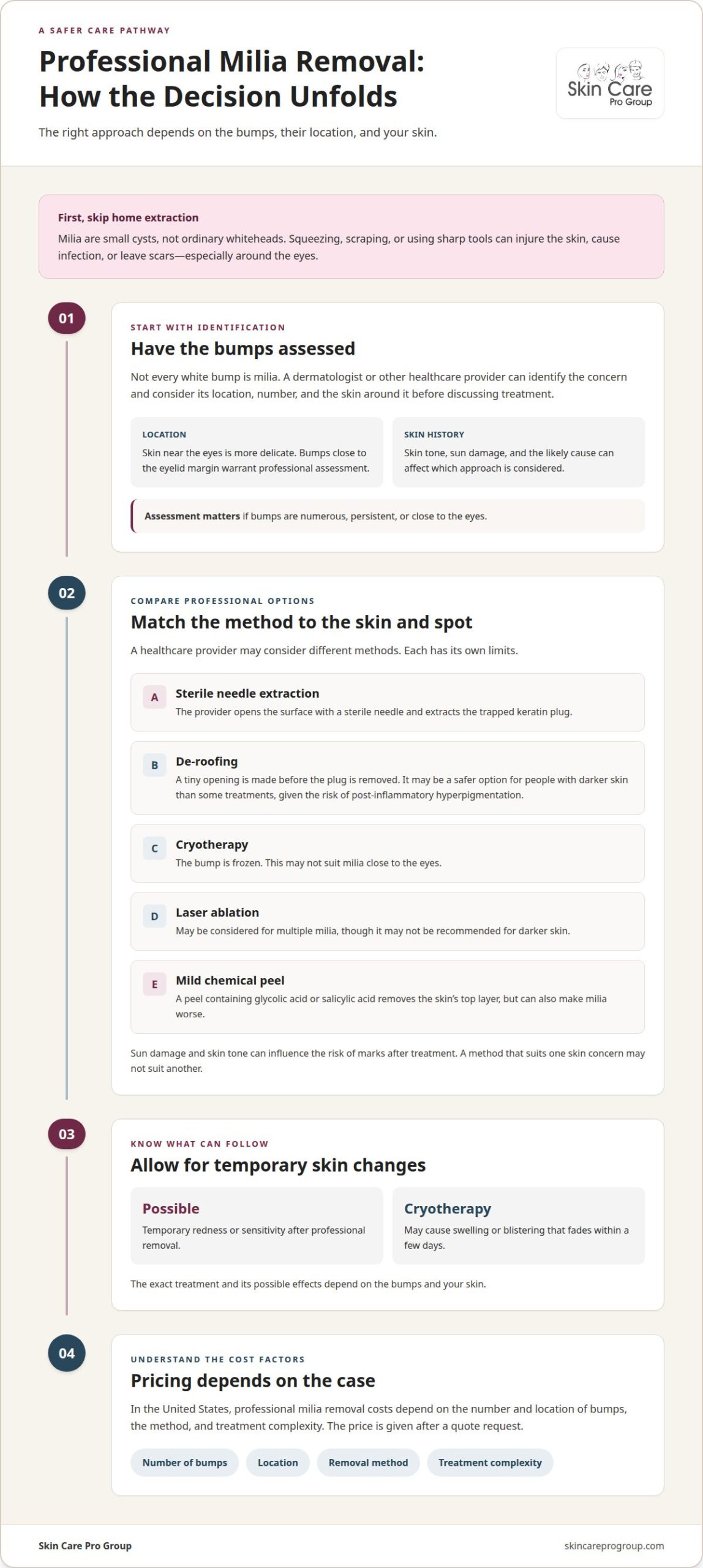
Professional treatment starts with identifying the bumps and considering their location, number, and the skin around them. Adults may prefer removal when milia persist or are cosmetically bothersome, rather than waiting for them to go away. The method matters: skin near the eyes is more delicate, and sun damage or skin tone can affect the risk of marks after treatment.
A dermatologist or other healthcare provider may use a sterile needle to open the surface and extract the keratin plug. Another option, called de-roofing, creates a tiny opening before removing the plug. For people with darker skin, de-roofing may be safer than some treatments because of the risk of post-inflammatory hyperpigmentation. Cryotherapy freezes a bump, but may not suit milia close to the eyes. Laser ablation may be considered for multiple milia, though it may not be recommended for darker skin.
A mild chemical peel containing glycolic acid or salicylic acid can remove the skin’s top layer, but peels can also worsen milia. Assessment matters because the best approach depends on the bump’s position, your skin, and the likely cause. Professional removal can leave temporary redness or sensitivity; cryotherapy may cause swelling or blistering that fades within a few days.
In the United States, professional milia removal costs depend on the number and location of bumps, the method, and treatment complexity. The price depends on the case and is given after a quote request.
If milia are close to your eyelid margin, numerous, or persistent, a dermatologist can assess them and choose an appropriate treatment method.
Skin Care Pro Group: Custom Facial
Skin Care Pro Group’s Custom Facial can help you build a skincare routine around your skin’s needs, especially if you’re unsure which products or exfoliating steps may be irritating it. It isn’t a milia extraction treatment, and it shouldn’t replace a dermatologist’s assessment when bumps persist, change, or sit close to the eyes.
A facial can be a useful next step for general skincare guidance, while medical removal calls for an appropriate healthcare professional. Tell your esthetician about the products you use, including retinoids or exfoliants, and mention any recent irritation or skin trauma. That context helps shape a considered facial approach without treating milia as a routine blemish.
For milia-specific diagnosis or removal, consult a dermatologist. For personalized facial care in Frederick, Maryland, contact Skin Care Pro Group.
Choose a next step that fits your skin
It’s easy to focus on getting a bump off your face, but the better question is what kind of care makes sense for your skin. If you’re still wondering how can I remove milia, let that question guide a calm decision, not a rushed attempt with a tool or product. A dermatologist is the right professional for diagnosis or removal. For broader skincare support, Skin Care Pro Group can help you consider a facial approach suited to your skin and routine.
Bring up the products you use and any recent irritation when discussing your skin. Those details can help make the conversation more useful and the next step more considered. There’s no need to solve it all at once. Plan your next skincare step with Skin Care Pro Group.
Frequently Asked Questions
What are milia?
Milium is the singular term; milia is plural. These bumps can occur at any age and across skin tones, and they’re usually neither itchy nor painful. Rough fabric may irritate them. Discomfort from rubbing doesn’t necessarily mean a bump is infected, but mention persistent irritation during an assessment.
What Products Should I Use?
Choose a facial sunscreen labeled SPF 30 or higher to help limit further sun damage. Sunscreen won’t remove milia, but it supports protection from a known aggravating factor. If you’re considering retinol or an exfoliant, check the product directions and avoid starting several new active products at once. That makes it easier to identify what may be irritating your skin.
When should I see my healthcare provider?
Seek an assessment if you can’t tell whether a bump is milia or another skin concern, or if a cluster forms a raised plaque. A less common presentation called milia en plaque may be treated with prescription tretinoin or minocycline. Bring a list of medicines and note when the bumps first appeared; that timeline can help inform the assessment.
What are milia and what causes them?
The term describes a skin finding, not one specific cause. Clinicians may consider whether bumps appeared on their own or after a skin injury or medication, then distinguish milia from lookalikes. This context can guide the next step, since similar-looking bumps may need different care. Note any recent skin changes to discuss during an assessment.
How can you safely remove milia at home?
There’s no reliable at-home technique for removing an intact milium. Instead, record when each spot appeared, take a clear photo in consistent lighting, and note any recent skin injury or medication changes. This record can make a professional assessment more useful, especially if the bumps are difficult to describe or seem to be changing.

Disclaimer
We study skin care, ingredients, equipment, treatment protocols with passion and care. We are not medical doctors and therefore, cannot diagnose skin illnesses or conditions or treatments for serious medical conditions.