

How to Find the Right Foundation Shade: A Professional Lesson for Flawless Skin
You’ve likely stood in front of a bathroom mirror, looking at a jawline that doesn’t match your neck, and wondered why that “perfect” store match now looks like a heavy mask. It’s frustrating to invest in premium products only to feel like you’re wearing someone else’s skin. Most people struggle with this because they haven’t had a proper how to find the right foundation shade lesson to guide them through the nuances of skin chemistry. You aren’t alone in feeling confused by the endless rows of bottles and conflicting advice about cool or warm tones.
We’re changing that today by sharing the same professional techniques used by experts to achieve a seamless, invisible finish. You’ll learn how to confidently identify your true undertone and master the art of swatching in a way that actually works. We’ll also explore how different lighting environments can change your look and why modern skinimalism is the key to a radiant, natural glow. By the end of this guide, you’ll have the technical knowledge to choose your foundation with the precision and confidence of a professional.
Key Takeaways
- Identify the critical difference between your surface skin tone, which changes seasonally, and your permanent undertone.
- Discover why the wrist is the wrong place for swatching and learn the professional technique for testing shades on your jawline.
- Master a how to find the right foundation shade lesson by testing three specific variations to ensure a perfect, seamless blend.
- Understand how skin texture and conditions like dryness can alter the appearance of your foundation, regardless of the color match.
- Learn why an educational, professional approach provides more reliable results than a standard retail color-matching service.
Understanding the Basics: Skin Tone vs. Undertone
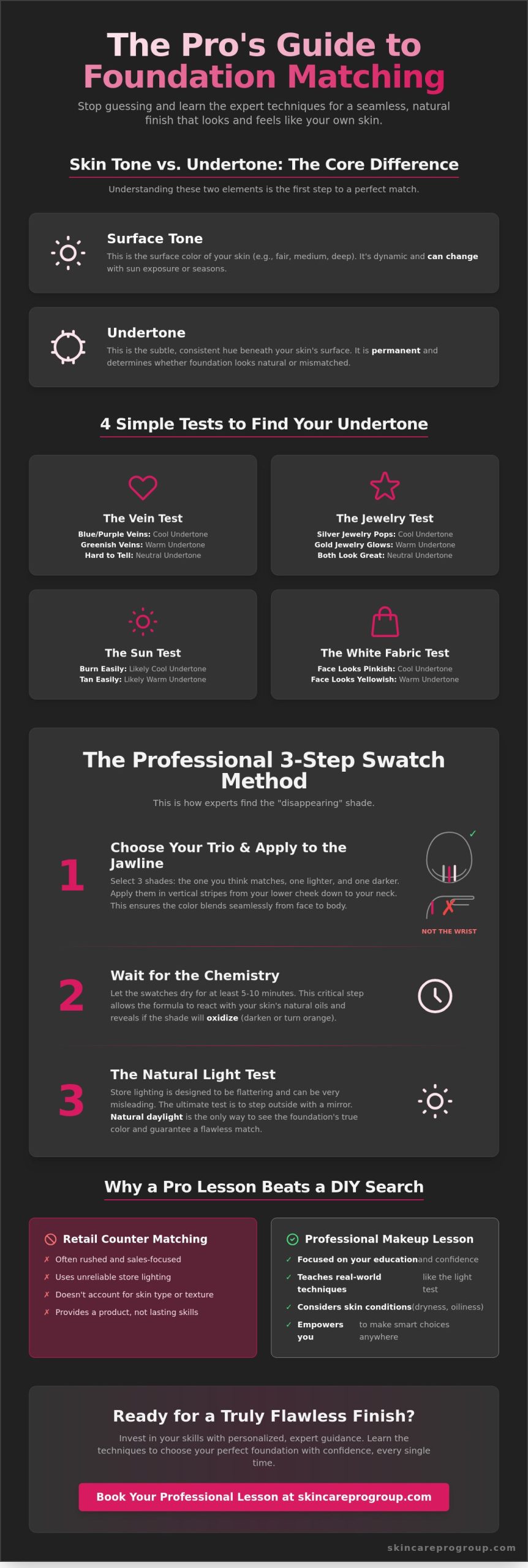
To begin your journey toward a flawless complexion, you must distinguish between your skin tone and your undertone. Your skin tone is the surface color you see in the mirror, often categorized as fair, medium, or deep. This layer is dynamic; it might deepen after a weekend in the sun or lighten during the winter months. In contrast, undertone is the subtle, unchanging color cast beneath your skin surface that dictates your best makeup matches. Understanding this distinction is the first step in any professional how to find the right foundation shade lesson because it prevents the most common matching errors.
Have you ever noticed your foundation looking perfect at 9:00 AM but turning a strange orange hue by lunchtime? This happens because of a process called oxidation. When the ingredients in Foundation (cosmetics) react with the natural oils and pH levels of your skin, the color can shift. If your skin is particularly oily or the product isn’t a good match for your specific chemistry, that beautiful beige can quickly turn into a muddy peach.
The Three Primary Undertones
- Cool: You’ll notice hints of pink, red, or even blue. Your veins usually appear blue or purple.
- Warm: Your skin has yellow, peachy, or golden undertones. Your veins likely look greenish.
- Neutral: You have a balanced mix of both. Your veins might be hard to distinguish, often matching your skin color perfectly.
Simple Tests You Can Do at Home
Identifying your undertone doesn’t require expensive tools, and it’s a core part of any how to find the right foundation shade lesson you might take. Try the white t-shirt test by holding a piece of pure white fabric next to your clean, unmade-up face. If your skin looks pinkish, you’re cool; if it looks yellowish, you’re warm. You can also use the jewelry test. Silver typically brightens cool complexions, while gold looks most harmonious on warm skin. Finally, consider your sun reaction. Those who burn easily usually have cool undertones, while those who tan quickly often lean warm.
The 3-Step Swatch Lesson: Finding Your Match
Testing foundation on your wrist is one of the most common mistakes in beauty. Your inner arm is rarely exposed to the same environmental factors as your face, making it an unreliable reference point for color matching. Instead, this how to find the right foundation shade lesson emphasizes a more strategic, professional approach. To find your perfect match, you should select three different shades: the one you believe is your match, one shade lighter, and one shade darker. This range allows you to see exactly how different pigments interact with your natural skin depth.
The goal of this process is what professionals call the “disappearing act.” The correct shade shouldn’t need heavy blending to look natural; it should simply vanish into your skin upon application. While high-quality formulas are designed to be seamless, achieving this result often requires the specific guidance provided in our makeup lessons. Using professional techniques ensures you aren’t just guessing, but making an informed choice based on Understanding Skin Tone and Undertones.
Step 1: The Jawline Technique
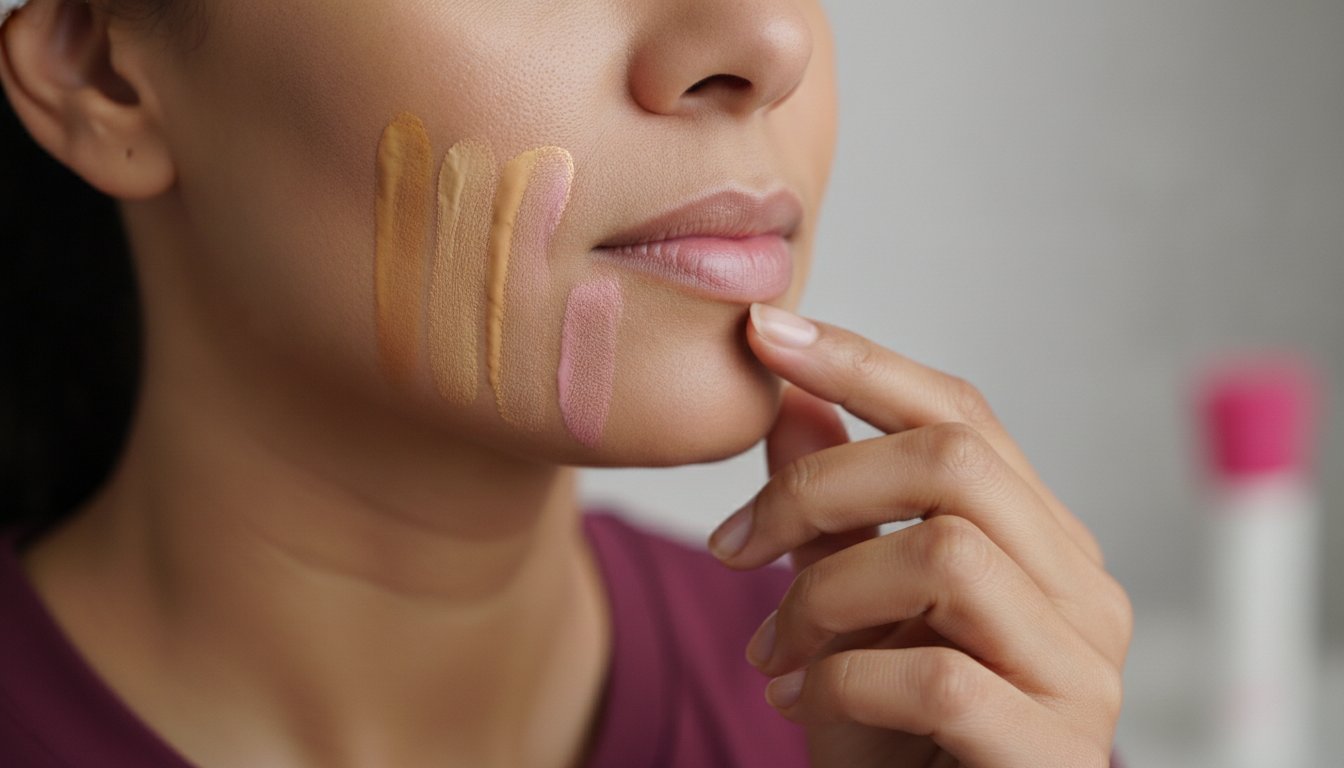
Apply each of your three chosen shades in vertical stripes starting from the lower cheek and extending down onto the neck. The neck serves as your ultimate “anchor” for a seamless transition. If the foundation matches your face but contrasts with your neck, you’ll end up with a mask-like appearance. Once applied, wait at least five to ten minutes. This allows the formula to settle and reveals if it will oxidize or darken as it interacts with your skin’s natural oils.
Step 2: The Lighting Litmus Test
Department store lighting is notoriously deceptive. These environments often use warm, yellow-toned bulbs that can make even a poor match look acceptable. The golden rule is to always check your swatches in natural daylight. Step outside with a hand mirror to see the true pigments. You might find that a shade looking perfect under warm home lights appears too ashy in blue-toned office lighting. Seeing how the color performs in the sun is the only way to guarantee a flawless finish. If you’re ready to refine your technique with expert guidance, you can book a personalized session to master these skills.
Why a Professional Makeup Lesson Beats a DIY Search
Relying on a quick color match at a busy retail counter often leads to long-term disappointment. These sessions are usually rushed and driven by immediate sales targets rather than your personal education. A professional how to find the right foundation shade lesson is a different experience entirely. It’s an investment in your skills, where the focus is on teaching you how to evaluate your skin under various conditions. We look beyond just the pigment to understand how your unique skin texture affects the final result. If your skin is struggling with congestion or dehydration, even a high-quality foundation will look uneven or cakey without the right professional approach.
Personalized Education in Frederick, MD
Local residents benefit from a hands-on environment where they receive a tailored roadmap for their specific face. Our One-on-One Makeup Lesson covers more than just color; it’s about mastering the tools of the trade. You’ll learn whether brushes or sponges work best for your skin type and how to apply your chosen shade for maximum longevity. Jennifer’s deep expertise in matching diverse skin tones ensures that every client leaves with a look that feels authentic and polished. It’s about building the confidence to recreate professional results every morning at home.
Prepping the Canvas with Skincare
The secret to a flawless application isn’t just the makeup; it’s the skin underneath. We often recommend a Custom Facial as the essential first step to achieving a perfect match. Removing dead skin cells through professional exfoliation or dermaplaning allows the foundation to sit smoothly on the surface rather than clinging to dry patches. This preparation is especially vital for those planning for big events, such as bridal makeup in Frederick, MD. When your skin is healthy and properly prepped, your foundation requires less effort to look like a second skin. If you’re ready to stop the guesswork, you can book your session today to start your journey toward expert-level application.
Master Your Flawless Finish Today
Achieving a seamless makeup look is a skill that combines technical knowledge with the right skin preparation. You now understand the vital difference between shifting surface tones and permanent undertones, along with the importance of testing shades in natural daylight. By applying the techniques from this how to find the right foundation shade lesson, you can avoid the frustration of mismatched products and embrace a look that truly enhances your natural features. Professional results come from a foundation of education and quality care rather than trial and error.
If you’re ready to refine your skills further, Jennifer offers a supportive environment at our private studio in Frederick, MD. We provide customized skincare and makeup plans designed to address your unique needs and goals. Whether you want to master a daily routine or prepare for a special event, expert guidance ensures you move forward with total confidence. Book Your One-on-One Makeup Lesson at Skin Care Pro Group and take the first step toward a more radiant you. You have the tools to look your best every single day.
Frequently Asked Questions
How do I know if my foundation undertone is wrong?
You’ll notice your foundation looks like a mask or creates a harsh line at the jaw if the undertone is incorrect. If the formula appears too orange or yellow, you’ve likely chosen a warm shade for a cool or neutral complexion. Conversely, if your skin looks ashy or grey, the foundation is too cool for your warm undertone. A professional how to find the right foundation shade lesson helps you identify these subtle shifts before you commit to a purchase.
Should foundation be lighter or darker than my skin?
Foundation should ideally match your skin exactly so it disappears upon application. If you find yourself between two shades, it’s generally safer to choose the slightly lighter option, as you can add warmth with bronzer later. However, the ultimate goal is to match the depth of your neck and chest to ensure a seamless transition. Testing multiple shades on your jawline is the best way to find that perfect balance so you aren’t just guessing.
What is oxidation and how does it affect my foundation shade?
Oxidation is a chemical reaction that occurs when foundation ingredients interact with the air and the natural oils on your skin. This process often causes the product to turn darker or more orange after it’s been worn for an hour or two. To account for this, always wait at least ten minutes during your how to find the right foundation shade lesson to see how the formula settles. This ensures you don’t buy a shade that looks perfect initially but shifts later.
Can I find my foundation shade online without swatching?
Finding a perfect match online is challenging because screen resolutions and digital swatches rarely represent true pigments accurately. While some digital tools use AI to suggest shades based on your current products, they can’t account for your skin’s unique texture or how a formula might oxidize on your face. Physical swatching in natural light remains the gold standard for accuracy. Professional guidance helps you get the right match the first time so you don’t waste money on incorrect online orders.