

How to Prevent Ingrown Hairs After Waxing: The Professional Guide to Smooth Skin
Why does the quest for smooth, hair-free skin so often end in a map of painful red bumps and itchy irritation? It’s a frustrating cycle that makes many people dread their maintenance appointments. If you’ve been searching for how to prevent ingrown hairs after waxing, you’ve likely realized that simply pulling the hair out is only half the battle. We know how discouraging it is when you’ve invested in a professional waxing hair removal service only to feel self-conscious about your skin’s appearance just a few days later.
You deserve to feel confident and comfortable in your own skin, and we’re here to tell you that those stubborn, inflamed bumps aren’t an inevitable side effect. In this guide, you’ll learn our expert-approved prevention protocol designed to stop irritation before it even starts. We’ll walk you through a precise three-phase system that covers professional exfoliation techniques, the science of proper hydration, and the critical post-care habits you need to maintain that silky, salon-fresh result for weeks.
Key Takeaways
- Understand the biological “barrier” problem where dead skin cells trap new hair growth, leading to painful inflammation and bumps.
- Discover how to prevent ingrown hairs after waxing by implementing a specific preparation window 48 hours before your appointment.
- Learn why professional technique and directional hair removal are critical for minimizing hair breakage and protecting the skin follicle.
- Identify specialized professional solutions, such as Back Treatments, to effectively manage irritation in difficult-to-reach areas.
- Gain a clear timeline for consistent exfoliation and moisturizing to maintain silky results throughout your entire hair regrowth cycle.
Understanding the Biology of Post-Wax Bumps and Ingrowns
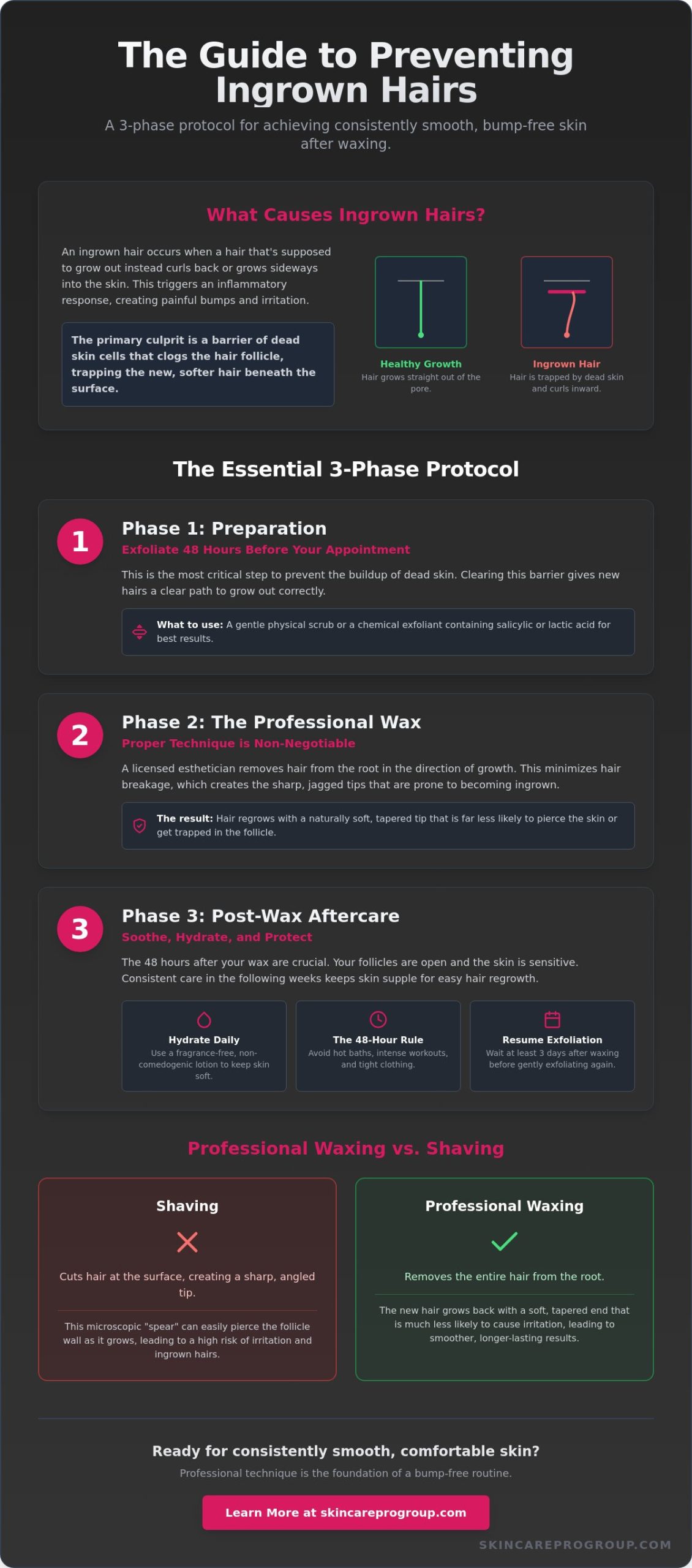
An ingrown hair is simply a strand that, instead of growing straight out through the pore, curls back or grows sideways into the skin follicle. This often triggers a localized inflammatory response, resulting in those small, red, and sometimes painful bumps we all want to avoid. Understanding Ingrown Hairs and their biological causes is the first step in mastering how to prevent ingrown hairs after waxing. While waxing is generally superior to shaving, it isn’t foolproof. If the hair isn’t removed correctly from the root, it can snap. These broken, jagged hairs are much more likely to get trapped beneath the surface during the regrowth phase.
The real culprit is often a physical barrier of dead skin cells. When these cells aren’t cleared away, they clog the follicle opening. The new, softer hair growing back after a wax doesn’t always have the strength to pierce through this hardened layer. It gets stuck underneath, which causes the body to treat the hair like a foreign object. A comprehensive strategy for how to prevent ingrown hairs after waxing involves more than just the treatment itself; it requires managing this cellular buildup. You’ll notice this most often in “hot spots” where skin is thinner or hair is coarser, such as the bikini line, underarms, and lower legs.
Why Shaving Often Makes the Problem Worse
Shaving is a temporary fix that creates a long-term struggle. Razors cut hair at the skin’s surface, leaving behind sharp, angled tips. These microscopic spears easily pierce the follicle wall as they grow, leading to instant irritation. Professional Waxing Hair Removal aims to remove the entire bulb from the root. This ensures that when the hair eventually regrows, it has a naturally tapered, soft end that’s less likely to cause trouble.
The Role of Keratin and Clogged Pores
Sometimes, your body produces too much keratin, a protective protein in the skin. This can lead to a condition called keratosis pilaris, where the excess protein creates a plug over the pore. The “follicle trap” is the primary cause of post-wax inflammation, as it forces the hair to grow inward against the skin’s natural path.
The Essential 3-Step Protocol to Prevent Ingrown Hairs
Maintaining smooth skin requires a disciplined routine that begins long before you arrive at the studio. To master how to prevent ingrown hairs after waxing, you must view the process as a three-phase system rather than a single event. A structured approach ensures that your skin remains healthy and that hair regrowth follows its intended path without obstruction.
Professional technique is the cornerstone of Phase 2. A licensed esthetician understands the precise angle of hair growth, which significantly reduces the risk of hair breakage. When hair snaps instead of being pulled from the root, it creates the jagged edges that lead to inflammation. In Frederick, our local climate plays a role too. During Maryland winters, the air is incredibly dry. This makes your skin less pliable, so using a heavier, high-quality moisturizer is essential to keep the skin soft enough for hair to emerge without resistance.
Step 1: Exfoliation Without Irritation
Exfoliation clears the dead skin cells that create the “follicle trap” we discussed earlier. You have two main options: physical scrubs or chemical exfoliants like salicylic or lactic acid. For the best results, perform a gentle exfoliation 2 days before your appointment. Crucially, wait at least 3 days after your wax before exfoliating again to allow the skin to heal and the follicles to close properly.
Step 2: Hydration and Soothing the Skin
Dry skin acts like a leather shield that hair cannot penetrate. Keeping the area hydrated is vital for preventing ingrown hairs. Stick to fragrance-free, non-comedogenic oils or lotions that won’t clog your pores. Well-hydrated skin remains supple, ensuring that new growth doesn’t get diverted beneath the surface as it matures.
Phase 3 involves the critical 48-hour rule. During this window, your follicles are open and vulnerable to bacteria and irritation. Avoid hot baths, intense gym sessions, and tight leggings that cause unnecessary friction. If you’re looking for professional guidance on how to prevent ingrown hairs after waxing, feel free to reach out to our team for personalized advice.
Professional Solutions and Long-Term Skin Health
Professional Waxing Hair Removal is the foundation of a successful, bump-free routine. Unlike DIY methods that often lead to uneven results, our licensed estheticians focus on the technical mechanics of hair removal. By pulling hair in the correct direction and at the proper speed, we minimize the microscopic breakage that causes painful bumps. This technical precision is a critical part of how to prevent ingrown hairs after waxing because it ensures the follicle remains healthy and unobstructed for the next growth cycle.
For those dealing with irritation in hard-to-reach places, we often recommend a Back Treatment. This service functions as a specialized facial for your back, addressing both “bacne” and deep-seated ingrown hairs that standard home scrubs simply can’t reach. Similarly, a Custom Facial can be tailored to manage facial hair regrowth. By optimizing your skin texture through professional exfoliation, we ensure your skin stays soft and ready for new hair to emerge without resistance.
Jennifer and the Skin Care Pro Group team act as your professional mentors in this journey. We believe in building a long-term partnership rather than just performing a one-time service. We’ll help you refine your home care protocol to match the specific needs of your skin type and the local Frederick climate, ensuring your results last well beyond your appointment.
When to See a Professional for an Ingrown
It’s tempting to reach for the tweezers when a bump appears, but home surgery usually leads to scarring or infection. According to the Mayo Clinic’s guide to preventing ingrown hairs, you should look for warning signs like excessive redness, warmth, or the presence of pus. If you notice these symptoms, it’s time to seek professional help. We can provide safe, sterile solutions to resolve the issue without damaging your skin.
Integrating Waxing into Your Skincare Journey
The best results come from consistency. Over time, regular appointments actually lead to thinner, finer hair that is much less likely to become trapped under the skin. We encourage Frederick residents to book a consultation for a full skin assessment. This allows us to create a personalized roadmap for how to prevent ingrown hairs after waxing while improving your overall skin health and confidence.
Achieving Lasting Smoothness and Skin Health
Mastering how to prevent ingrown hairs after waxing isn’t just about the few minutes you spend in the treatment room; it’s about the partnership you build with your skin. By understanding the biology of hair growth and following a disciplined protocol of exfoliation and hydration, you can finally break the cycle of painful bumps. Consistency is your greatest asset. Over time, your skin will become more resilient and your hair finer, leading to the effortless results you’ve always wanted.
At Skin Care Pro Group, we provide more than just a service. Licensed esthetician Jennifer brings years of experience to every appointment, ensuring that your treatment is performed with technical precision in a safe, clean, and professional studio environment. We don’t believe in one-size-fits-all solutions. This is why every client receives customized post-care advice tailored to their specific skin type and lifestyle needs.
If you’re ready to upgrade your hair removal routine and enjoy truly silky skin, we’re here to guide you. Book your professional waxing appointment in Frederick today and take the first step toward a more confident you. We look forward to helping you achieve your skincare goals.
Frequently Asked Questions
How soon after waxing can I exfoliate to prevent bumps?
You should wait at least 72 hours after your appointment before you begin any exfoliation routine. This three day window allows your skin’s natural barrier to recover and ensures your hair follicles have closed completely. If you’re looking for how to prevent ingrown hairs after waxing, starting too early can actually cause micro-tears and increased irritation. Once this initial period passes, gentle exfoliation two to three times a week is ideal.
Is it normal to have red bumps immediately after a wax?
Yes, seeing small red bumps immediately after your service is a perfectly normal inflammatory response. This reaction, often called histamine bumps, typically subsides within 24 to 48 hours as the skin calms down. It’s simply your body’s way of responding to the hair being removed from the root. To manage this initial redness, keep the area clean and avoid heat or friction until the bumps disappear naturally.
Can tight clothing really cause ingrown hairs?
Tight clothing is a major contributor to post-wax irritation because it creates constant friction against sensitive follicles. When you wear restrictive fabrics like spandex or tight denim, you trap heat and sweat while physically forcing regrowing hair back toward the skin. For at least 48 hours after your treatment, choose loose, breathable cotton clothing. This simple habit is a key part of how to prevent ingrown hairs after waxing by allowing the skin to breathe.
What is the best ingredient to look for in post-wax products?
Look for products containing salicylic acid or tea tree oil to keep your skin clear and calm. Salicylic acid is an oil-soluble exfoliant that penetrates the pore to dissolve dead skin cells, while tea tree oil provides natural antibacterial benefits. If your skin is particularly sensitive, soothing ingredients like aloe vera can help reduce inflammation. Always ensure your chosen lotions or oils are non-comedogenic to avoid clogging the pores you’re trying to protect.