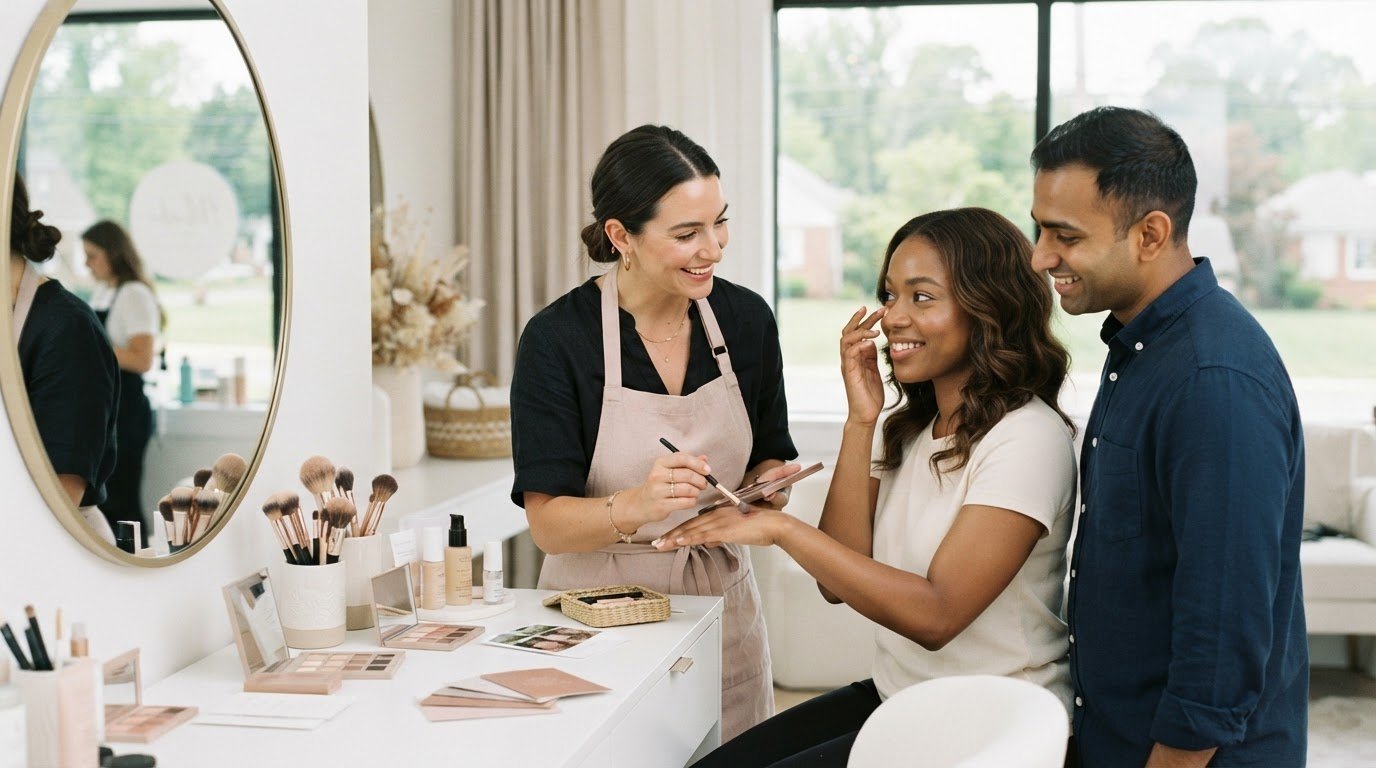
The most useful questions to ask a bridal makeup artist cover more than the look itself. Ask about the trial, products and allergies, touch-ups, and how the artist’s specialties fit your plans. A trial lets you test the makeup, explain what feels like you, and request adjustments before the wedding day.

It’s natural to focus on inspiration photos, but practical details matter just as much when choosing a look you’ll feel comfortable wearing and seeing in photographs. Ask about the artist’s bridal experience, how they’ll work with your skin tone and preferences, and what preparation and timing involve.

This guide covers the conversations that can help you make a clear, confident choice, from sharing styles you love or want to avoid to discussing product sensitivities and touch-up plans. It also explains what to ask about bridal hair and makeup, so you can understand how each specialty fits into your wedding morning.

Key Takeaways

  • Bring inspiration photos to your trial, and explain what you like, what you’d change, and what you’d rather avoid.
  • Discuss product sensitivities, allergies, and touch-up plans before settling on your wedding-day makeup.
  • Choose an artist whose bridal makeup experience and specialties suit your preferred look, skin tone, and wedding plans.
  • For a skincare step before the wedding, Skin Care Pro Group’s Custom Facial can be tailored to your skin’s needs.

1. Choosing a look through consultation or trial

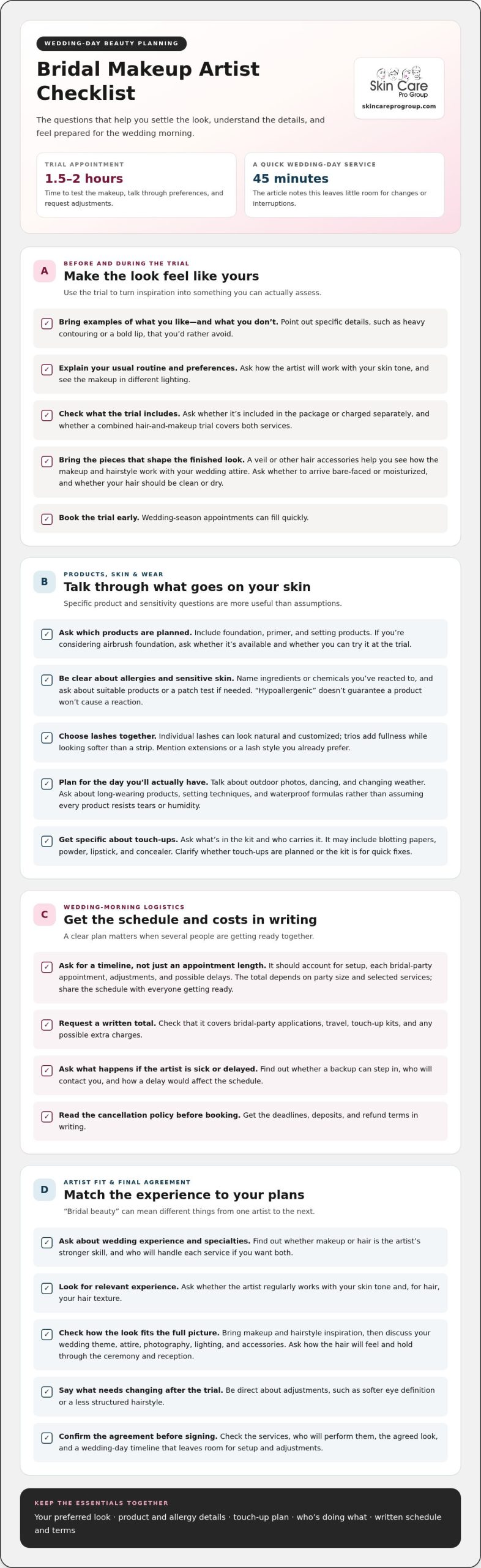
A trial turns saved photos into a look you can assess before the wedding. Bridal makeup trials often take one and a half to two hours. Bring photos of styles you like, along with examples of details you want to avoid, such as heavy contouring or a bold lip. Explain your usual makeup routine and ask to see the look in different lighting.

Ask whether the trial is included in the package or charged separately. Request a written total covering bridal party applications, travel, touch-up kits, and any possible extra charges. If hair is included, clarify whether the trial covers both services. Bring a veil or other hair accessories to see how the complete look works with your wedding attire.

How long does bridal makeup take, and what is the wedding-day schedule? A 45-minute service is fairly quick, with little time for changes or interruptions. Ask for a timeline covering setup, each bridal party appointment, adjustments, and possible delays. Share it with everyone getting ready; the total depends on party size and selected services.

Ask what happens if the makeup artist is sick or delayed on the wedding day. Find out whether a backup artist can step in, who will contact you, and how a delay would affect the schedule. Before booking, get the cancellation policy in writing, including deadlines, deposits, and refunds.

Book your trial early, since wedding-season appointments can fill quickly. For a combined trial, ask whether to arrive bare-faced or moisturized, and whether your hair should be clean or dry. Bring your veil or other accessories, and gather bridal party photos ahead of time to clarify everyone’s preferred styles.

2. Products, airbrush makeup, allergies, and touch-up kits

Ask which makeup brands and products the artist plans to use, including foundation, primer, and setting products. If you’re considering airbrush foundation, ask whether it’s available and whether you can try it during a trial. Comparing the finish with your preferred look can help you decide what suits your vision.

Before booking, share any allergies to specific ingredients or chemicals and describe your sensitive-skin concerns clearly. Ask whether the products are suitable for sensitive skin and whether the artist can perform a patch test if needed. “Hypoallergenic” doesn’t guarantee a product won’t cause a reaction, so identifying ingredients you’ve reacted to is more useful than relying on a label.

For lashes, ask about individual lashes, lash trios, and strip lashes. Individual lashes can create a natural, customized effect; trios add fullness while looking softer than a strip. If you wear extensions or have a preferred lash style, mention it during the trial so the artist can plan around your usual look.

Ask how the artist plans to make your makeup last through the wedding day, especially if your schedule includes outdoor photos, dancing, or changing weather. Discuss long-wearing products and setting techniques, then test the approach during a trial. Ask specifically about waterproof products instead of assuming every formula resists tears or humidity.

Clarify what the touch-up kit includes and who will carry it. A practical kit may contain blotting papers, powder, lipstick, and concealer. Ask which items match the products used and whether touch-ups are planned or the kit is for quick fixes. Sharing portfolio references can also help the artist understand the finish and makeup look you want.

3. Bridal makeup and hair specialties

“Bridal beauty” can mean different things to different artists. Ask about their wedding experience and whether makeup or hair is their stronger specialty. If you want both services, find out who will handle each on the wedding morning. One artist may not specialize in both, which can affect the schedule and final look.

Look for experience that matches your needs, not just a broad portfolio. Ask whether the artist regularly works with your skin tone and, for hair, your hair texture. Bring inspiration showing your preferred makeup and hairstyle, then discuss how each would suit your wedding theme, attire, and photography. A sleek updo with a veil calls for different planning than loose curls with a flower crown.

Ask how the makeup will wear through the day and photograph in natural and indoor lighting. For hair, discuss how the style will work with your accessories and stay comfortable through the ceremony and reception. If the trial reveals a mismatch, name the adjustment you want, such as softer eye definition or a less structured hairstyle.

Before signing a contract, confirm the services, who will perform them, the agreed look, and the wedding-day timeline. Check that the schedule allows time for setup and adjustments, especially if several clients are getting ready together. Clear responsibilities prevent last-minute surprises. For bridal makeup application tailored to your wedding look, get in touch to discuss your plans.

Skin Care Pro Group: Custom Facial

Skin Care Pro Group offers a Custom Facial for brides who want a professional skincare appointment as part of their wedding preparation. It’s an opportunity to discuss your skin’s current needs and choose an approach suited to them, rather than adding a new step without a plan.

If you’re considering a more targeted treatment, ask whether The ‘Pro’ Facial, microdermabrasion, or dermaplaning fits your skincare goals and timing. Share any sensitivities and your wedding date so the discussion can take your routine and priorities into account. A facial supports skincare; it doesn’t replace choosing a makeup artist or arranging bridal makeup services.

To discuss a Custom Facial, contact Skin Care Pro Group.
Make Your Wedding Look Feel Like Yours

The best wedding look isn’t necessarily the most dramatic or popular. It’s the one that feels considered, comfortable, and true to you. Keep your preferences clear, and let the answers to your questions to ask a bridal makeup artist guide your next steps without adding to the stress.

As you plan, give skincare its own place in the timeline. A professional facial can be part of your preparation, especially if you want to discuss your skin’s needs before the wedding. Skin Care Pro Group offers Custom Facial, The ‘Pro’ Facial, and Microdermabrasion.

Ready to talk through your skincare plans? Contact Skin Care Pro Group and take the next step toward feeling at ease in your wedding-day look.

Frequently Asked Questions

What questions should I ask a bridal makeup artist before booking?

Useful questions to ask a bridal makeup artist include who will handle communication on the wedding day and what happens if your getting-ready location changes. Ask how to share schedule or venue updates and who needs to receive them. Clear logistics help prevent a small change, such as switching rooms, from disrupting the morning’s plan.

How much does bridal makeup cost in the United States, including a trial and travel fees?

There’s no single standard price across the United States. The total depends on the services, trial arrangements, travel distance, bridal party size, and any requested touch-up support. Ask for an itemized quote explaining what’s included and which additions affect the total. This gives you a practical way to compare proposals without relying on a headline figure.

What should I ask about a bridal makeup trial and when should I schedule it?

Add this to your questions to ask a bridal makeup artist: what happens after the trial if you want a small adjustment? Ask how to share feedback and whether the artist can document your final choices for reference on the wedding day. After the trial, note how the makeup feels and wears during your usual routine, not just how it looks in the mirror.

How can I check a bridal makeup artist’s portfolio, reviews, and credentials?

Check that the work shown was done by the person who’ll apply your makeup, rather than assuming every image belongs to the same artist. Look for reviews with repeated, specific comments about professionalism and communication. Ask what training the artist has completed and what it covers. A clear answer helps you understand their preparation without relying on a title alone.

What should I ask about makeup products, skin sensitivity, allergies, and hygiene?

Along with ingredient questions, ask how the artist maintains hygiene during an appointment. Find out whether mascara and lip products are applied with fresh, single-use applicators and how brushes are cleaned between clients. If a product comes from a shared container, ask how cross-contamination is prevented. These practical details help you understand the setup before the wedding day.
Maria-The Lioness

Article by

Maria-The Lioness

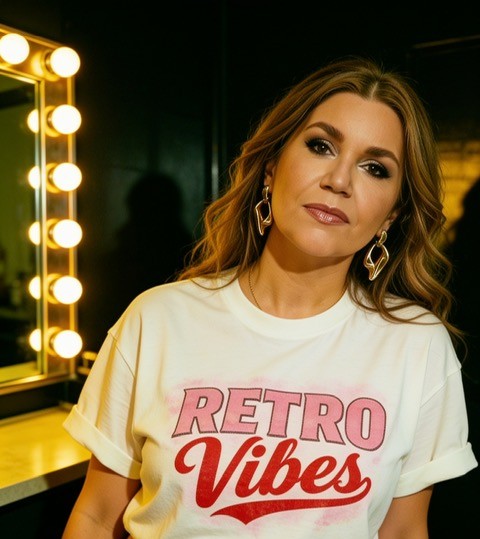
Skin care and makeup mentor and teacher in Frederick, MD who loves to learn what really works and helps a person glow and be skin healthy without aggressive treatments. Baby boomer woman, mother, and grandmother out to share what I wish I knew sooner.

Disclaimer

We study skin care, ingredients, equipment, treatment protocols with passion and care. We are not medical doctors and therefore, cannot diagnose skin illnesses or conditions or treatments for serious medical conditions.

Questions to Ask a Bridal Makeup Artist Before Choosing Your Look

Questions to Ask a Bridal Makeup Artist Before Choosing Your Look

The most useful questions to ask a bridal makeup artist cover more than the look itself. Ask about the trial, products and allergies, touch-ups, and how the artist’s specialties fit your plans. A trial lets you test the makeup, explain what feels like you, and request adjustments before the wedding day.

It’s natural to focus on inspiration photos, but practical details matter just as much when choosing a look you’ll feel comfortable wearing and seeing in photographs. Ask about the artist’s bridal experience, how they’ll work with your skin tone and preferences, and what preparation and timing involve.

This guide covers the conversations that can help you make a clear, confident choice, from sharing styles you love or want to avoid to discussing product sensitivities and touch-up plans. It also explains what to ask about bridal hair and makeup, so you can understand how each specialty fits into your wedding morning.

Key Takeaways

  • Bring inspiration photos to your trial, and explain what you like, what you’d change, and what you’d rather avoid.
  • Discuss product sensitivities, allergies, and touch-up plans before settling on your wedding-day makeup.
  • Choose an artist whose bridal makeup experience and specialties suit your preferred look, skin tone, and wedding plans.
  • For a skincare step before the wedding, Skin Care Pro Group’s Custom Facial can be tailored to your skin’s needs.

1. Choosing a look through consultation or trial

A trial turns saved photos into a look you can assess before the wedding. Bridal makeup trials often take one and a half to two hours. Bring photos of styles you like, along with examples of details you want to avoid, such as heavy contouring or a bold lip. Explain your usual makeup routine and ask to see the look in different lighting.

Ask whether the trial is included in the package or charged separately. Request a written total covering bridal party applications, travel, touch-up kits, and any possible extra charges. If hair is included, clarify whether the trial covers both services. Bring a veil or other hair accessories to see how the complete look works with your wedding attire.

How long does bridal makeup take, and what is the wedding-day schedule? A 45-minute service is fairly quick, with little time for changes or interruptions. Ask for a timeline covering setup, each bridal party appointment, adjustments, and possible delays. Share it with everyone getting ready; the total depends on party size and selected services.

Ask what happens if the makeup artist is sick or delayed on the wedding day. Find out whether a backup artist can step in, who will contact you, and how a delay would affect the schedule. Before booking, get the cancellation policy in writing, including deadlines, deposits, and refunds.

Book your trial early, since wedding-season appointments can fill quickly. For a combined trial, ask whether to arrive bare-faced or moisturized, and whether your hair should be clean or dry. Bring your veil or other accessories, and gather bridal party photos ahead of time to clarify everyone’s preferred styles.

2. Products, airbrush makeup, allergies, and touch-up kits

Before booking, share any allergies to specific ingredients or chemicals and describe your sensitive-skin concerns clearly. Ask whether the products are suitable for sensitive skin and whether the artist can perform a patch test if needed. “Hypoallergenic” doesn’t guarantee a product won’t cause a reaction, so identifying ingredients you’ve reacted to is more useful than relying on a label.

For lashes, ask about individual lashes, lash trios, and strip lashes. Individual lashes can create a natural, customized effect; trios add fullness while looking softer than a strip. If you wear extensions or have a preferred lash style, mention it during the trial so the artist can plan around your usual look.

Ask how the artist plans to make your makeup last through the wedding day, especially if your schedule includes outdoor photos, dancing, or changing weather. Discuss long-wearing products and setting techniques, then test the approach during a trial. Ask specifically about waterproof products instead of assuming every formula resists tears or humidity.

Clarify what the touch-up kit includes and who will carry it. A practical kit may contain blotting papers, powder, lipstick, and concealer. Ask which items match the products used and whether touch-ups are planned or the kit is for quick fixes. Sharing portfolio references can also help the artist understand the finish and makeup look you want.

3. Bridal makeup and hair specialties

“Bridal beauty” can mean different things to different artists. Ask about their wedding experience and whether makeup or hair is their stronger specialty. If you want both services, find out who will handle each on the wedding morning. One artist may not specialize in both, which can affect the schedule and final look.

Look for experience that matches your needs, not just a broad portfolio. Ask whether the artist regularly works with your skin tone and, for hair, your hair texture. Bring inspiration showing your preferred makeup and hairstyle, then discuss how each would suit your wedding theme, attire, and photography. A sleek updo with a veil calls for different planning than loose curls with a flower crown.

Ask how the makeup will wear through the day and photograph in natural and indoor lighting. For hair, discuss how the style will work with your accessories and stay comfortable through the ceremony and reception. If the trial reveals a mismatch, name the adjustment you want, such as softer eye definition or a less structured hairstyle.

Before signing a contract, confirm the services, who will perform them, the agreed look, and the wedding-day timeline. Check that the schedule allows time for setup and adjustments, especially if several clients are getting ready together. Clear responsibilities prevent last-minute surprises. For bridal makeup application tailored to your wedding look, get in touch to discuss your plans.

Skin Care Pro Group: Custom Facial

Skin Care Pro Group offers a Custom Facial for brides who want a professional skincare appointment as part of their wedding preparation. It’s an opportunity to discuss your skin’s current needs and choose an approach suited to them, rather than adding a new step without a plan.

If you’re considering a more targeted treatment, ask whether The ‘Pro’ Facial, microdermabrasion, or dermaplaning fits your skincare goals and timing. Share any sensitivities and your wedding date so the discussion can take your routine and priorities into account. A facial supports skincare; it doesn’t replace choosing a makeup artist or arranging bridal makeup services.

To discuss a Custom Facial, contact Skin Care Pro Group.

Questions to Ask a Bridal Makeup Artist Before Choosing Your Look

Make Your Wedding Look Feel Like Yours

The best wedding look isn’t necessarily the most dramatic or popular. It’s the one that feels considered, comfortable, and true to you. Keep your preferences clear, and let the answers to your questions to ask a bridal makeup artist guide your next steps without adding to the stress.

As you plan, give skincare its own place in the timeline. A professional facial can be part of your preparation, especially if you want to discuss your skin’s needs before the wedding. Skin Care Pro Group offers Custom Facial, The ‘Pro’ Facial, and Microdermabrasion.

Ready to talk through your skincare plans? Contact Skin Care Pro Group and take the next step toward feeling at ease in your wedding-day look.

Frequently Asked Questions

What questions should I ask a bridal makeup artist before booking?

Useful questions to ask a bridal makeup artist include who will handle communication on the wedding day and what happens if your getting-ready location changes. Ask how to share schedule or venue updates and who needs to receive them. Clear logistics help prevent a small change, such as switching rooms, from disrupting the morning’s plan.

How much does bridal makeup cost in the United States, including a trial and travel fees?

There’s no single standard price across the United States. The total depends on the services, trial arrangements, travel distance, bridal party size, and any requested touch-up support. Ask for an itemized quote explaining what’s included and which additions affect the total. This gives you a practical way to compare proposals without relying on a headline figure.

What should I ask about a bridal makeup trial and when should I schedule it?

Add this to your questions to ask a bridal makeup artist: what happens after the trial if you want a small adjustment? Ask how to share feedback and whether the artist can document your final choices for reference on the wedding day. After the trial, note how the makeup feels and wears during your usual routine, not just how it looks in the mirror.

How can I check a bridal makeup artist’s portfolio, reviews, and credentials?

Check that the work shown was done by the person who’ll apply your makeup, rather than assuming every image belongs to the same artist. Look for reviews with repeated, specific comments about professionalism and communication. Ask what training the artist has completed and what it covers. A clear answer helps you understand their preparation without relying on a title alone.

What should I ask about makeup products, skin sensitivity, allergies, and hygiene?

Along with ingredient questions, ask how the artist maintains hygiene during an appointment. Find out whether mascara and lip products are applied with fresh, single-use applicators and how brushes are cleaned between clients. If a product comes from a shared container, ask how cross-contamination is prevented. These practical details help you understand the setup before the wedding day.

Maria-The Lioness

Article by

Maria-The Lioness

Skin care and makeup mentor and teacher in Frederick, MD who loves to learn what really works and helps a person glow and be skin healthy without aggressive treatments. Baby boomer woman, mother, and grandmother out to share what I wish I knew sooner.

Disclaimer

We study skin care, ingredients, equipment, treatment protocols with passion and care. We are not medical doctors and therefore, cannot diagnose skin illnesses or conditions or treatments for serious medical conditions.