


Seasonal Skincare Tips: A Simple Checklist for Every Season
Does a change in weather mean you need to replace your entire skincare routine? Usually, a few thoughtful adjustments are enough. If your skin feels drier, oilier, or more sensitive as the seasons shift, these seasonal skincare tips can help you decide what to change and what to keep.
Use the checklists below to review your cleanser, moisturizer, and sun protection habits without starting from scratch. You’ll also learn how to tell when an adjustment isn’t helping and when individualized guidance may be useful. Whether you’re in Frederick, Walkersville, Hagerstown, or Urbana, Maryland, the goal is a routine that responds to your skin and your daily activities, without unnecessary steps.
Key Takeaways
- Use seasonal skincare tips as a guide, not a rulebook. Notice what feels different and adjust one routine step at a time.
- Review your cleanser and moisturizer each season, but change them only if your needs shift.
- Keep reviewing your sun protection habits as daylight and outdoor activities change.
- If discomfort or a skin concern persists, pause experimenting and consider qualified guidance. Skin Care Pro Group offers Custom Facials.
Seasonal Skincare Tips: What Changes When the Weather Does?
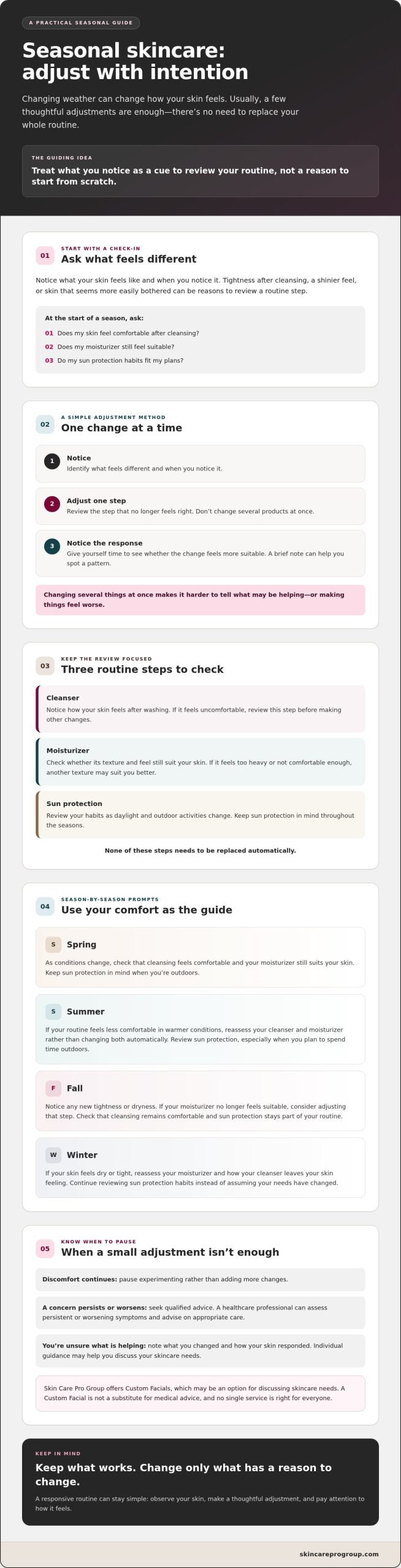
A change in weather can affect how your skin feels, but it won’t affect everyone in the same way. You might notice tightness after cleansing, a shinier feel, or skin that seems more easily bothered. Treat these as cues to review your routine, not a reason to replace every product at once. For background on the skin and its role in sensing its surroundings, see the skin’s functions.
Start with one observation: what feels different, and when do you notice it? Then adjust one routine step and give yourself time to see whether it feels more suitable before changing anything else. A brief note about what you changed and how your skin responded can make it easier to spot a pattern.
A seasonal routine adjustment means fine-tuning a step that no longer feels right, not replacing your entire skincare routine.
Which skincare steps may need a seasonal adjustment?
As seasons shift around Frederick and nearby Maryland communities, use your skin’s comfort as a guide rather than following a fixed calendar. Check your cleanser, moisturizer, and sun protection habits. None needs to be replaced automatically. If your moisturizer feels too heavy or doesn’t feel comfortable enough, consider whether another texture might suit you better. If cleansing leaves your skin uncomfortable, reassess that step before changing other products.
- Cleanser: Notice how your skin feels after washing. If it feels uncomfortable, review this step before making other changes.
- Moisturizer: Check whether its texture and feel still suit your skin.
- Sun protection: Review your habits in light of your time outdoors and changing daylight.
Change one thing at a time so you can tell what may be helping. If a concern persists or worsens, pause experimentation and seek qualified advice.
A Seasonal Skincare Checklist for Spring, Summer, Fall, and Winter
How should your routine shift from season to season?
At the start of each season, ask yourself three questions: Does my skin feel comfortable after cleansing? Does my moisturizer still feel suitable? Do my sun protection habits fit my plans? For background on possible winter effects, read the University of Rochester Medical Center’s overview of how winter weather influences skin. Use your own experience to decide whether an adjustment is needed.
- Spring: As conditions change, check that cleansing feels comfortable and your moisturizer still suits your skin. Keep sun protection in mind when you’re outdoors.
- Summer: If your routine feels less comfortable in warmer conditions, reassess your cleanser and moisturizer rather than changing both automatically. Review sun protection habits, especially when you plan to spend time outdoors.
- Fall: Notice any new tightness or dryness. If your moisturizer no longer feels suitable, consider adjusting that step. Check that cleansing remains comfortable and sun protection stays part of your routine.
- Winter: If your skin feels dry or tight, reassess your moisturizer and how your cleanser leaves your skin feeling. Continue reviewing sun protection habits instead of assuming your needs have changed.
Change one routine step at a time, then notice how your skin responds. This gradual approach makes it easier to tell whether an adjustment suits you. A common mistake is switching several products at once, which makes it harder to identify what feels better or worse.
When Seasonal Skincare Tips Aren’t Enough: Choose a Thoughtful Next Step
Seasonal skincare tips can help you make small, careful changes, but they can’t answer every concern. If discomfort continues, a skin concern persists, or each adjustment leaves you less sure what to do next, pause experimenting rather than adding more changes. A healthcare professional can assess persistent or worsening symptoms and advise you on appropriate care.
When can a personalized skincare conversation help?
Individual guidance may be useful when it’s hard to tell whether a routine change is helping or a concern isn’t settling. Note what you changed and how your skin responded so you can explain the situation clearly. Skin Care Pro Group offers Custom Facials, which may be an option for discussing your skincare needs.
If you’re considering professional skincare support in Frederick or nearby communities, learn more about the appointment process. A Custom Facial is not a substitute for medical advice, and no single service is right for everyone. Choose a next step that fits your concern rather than feeling pressured to change your whole routine.
Keep Your Routine Responsive, Not Complicated
Your skin doesn’t need a full reset every time the season changes. The most useful seasonal skincare tips are often simple: pay attention to comfort, review cleansing, moisturizing, and sun protection, and make one change at a time. What feels right can vary, so let your own skin guide gradual adjustments instead of following a rigid seasonal rule.
If a concern continues or routine changes leave you unsure, consider qualified, individualized advice rather than adding more products or steps. Skin Care Pro Group is a professional skincare and makeup studio in Frederick, Maryland, offering Custom Facials and other skincare services. The studio serves clients in Frederick, Walkersville, Hagerstown, and Urbana.
Contact Skin Care Pro Group to discuss your skincare questions. Start with a manageable routine, and adjust it only when your skin gives you a reason to do so.
Frequently Asked Questions
How should I change my skincare routine for each season?
Review how your skin feels, then consider whether your cleanser, moisturizer, or sun protection habits still suit you. Change one step at a time and notice the response before making another adjustment. These seasonal skincare tips are prompts to observe your skin, not instructions to follow a fixed routine. Individual needs can differ.
Do I need to use sunscreen in winter?
Sun protection habits are worth reviewing throughout the year, including winter. Consider how much time you typically spend outdoors and whether protection is part of your usual routine. Don’t assume the season alone means you should stop. Make choices based on your activities and needs, since no single seasonal rule fits everyone.
Can I use the same skincare routine all year?
Yes. Some parts of your routine may stay consistent throughout the year, and you don’t need to replace products just because the season changes. If your skin starts to feel different, check whether your cleanser and moisturizer remain comfortable, and review your sun protection habits. If a change seems useful, adjust one step at a time and observe how your skin responds.
When should I ask an esthetician about seasonal skin changes?
Consider personalized guidance if a concern persists or you’re having trouble figuring out whether a routine change is helping. Skin Care Pro Group offers Custom Facials at its skincare studio in Frederick, serving Walkersville, Hagerstown, and Urbana, Maryland. An esthetician can discuss skincare concerns, while persistent or worsening symptoms may call for advice from a healthcare professional.

Disclaimer
We study skin care, ingredients, equipment, treatment protocols with passion and care. We are not medical doctors and therefore, cannot diagnose skin illnesses or conditions or treatments for serious medical conditions.