

What Is Dermaplaning Peach Fuzz? The Complete Guide to Smooth Skin in 2026
Removing facial hair isn’t the primary goal of dermaplaning; it’s simply a radiant bonus. If you’ve watched your foundation cling awkwardly to fine facial hair or felt your complexion looks dull despite careful moisturizing, you’re not alone. Many people wonder what is dermaplaning peach fuzz, often fearing that clearing away surface fuzz is just glorified shaving that leads to dark, prickly stubble or irritated pores.
You can put those worries to rest. In this guide, you’ll discover how dermaplaning safely removes peach fuzz and dead skin cells to reveal a brighter, smoother complexion without altering your hair texture in the slightest. We’ll break down the key differences between fine vellus fuzz and coarse hair, dispel widespread exfoliation myths, and show you exactly how this treatment fits into an effective, long-term skincare routine.
Key Takeaways
- Understanding what is dermaplaning peach fuzz begins with seeing it as a dual-action exfoliation that sweeps away dull dead cells alongside soft vellus hair.
- Facial hair will never grow back thicker or darker, because surface exfoliation does not alter your underlying hair follicles.
- Removing fine fuzz and dead cell buildup instantly smooths skin texture, helping daily serums absorb deeper and makeup apply seamlessly.
- A professional studio treatment pairs precise blade exfoliation with soothing hydration to keep your skin barrier calm and healthy.
What Is Dermaplaning and How Does It Remove Peach Fuzz?
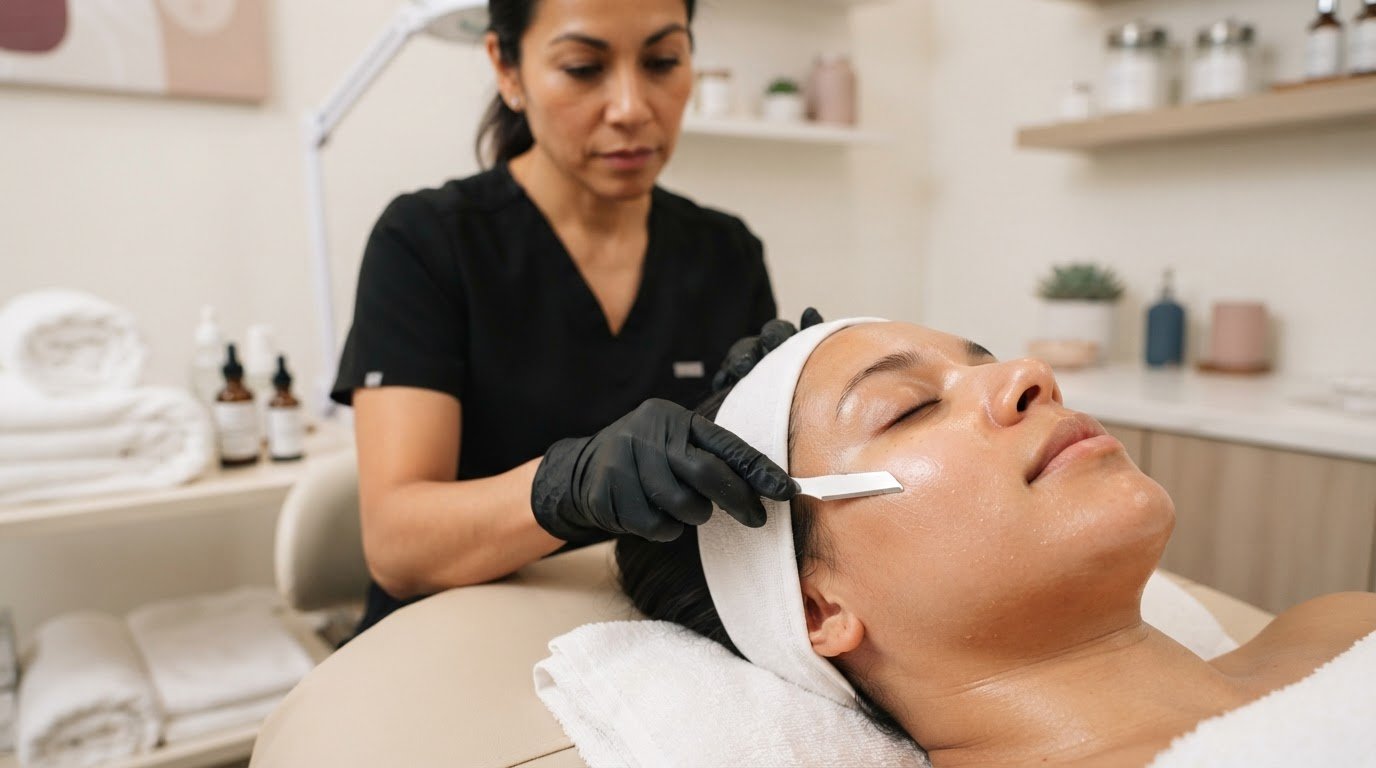
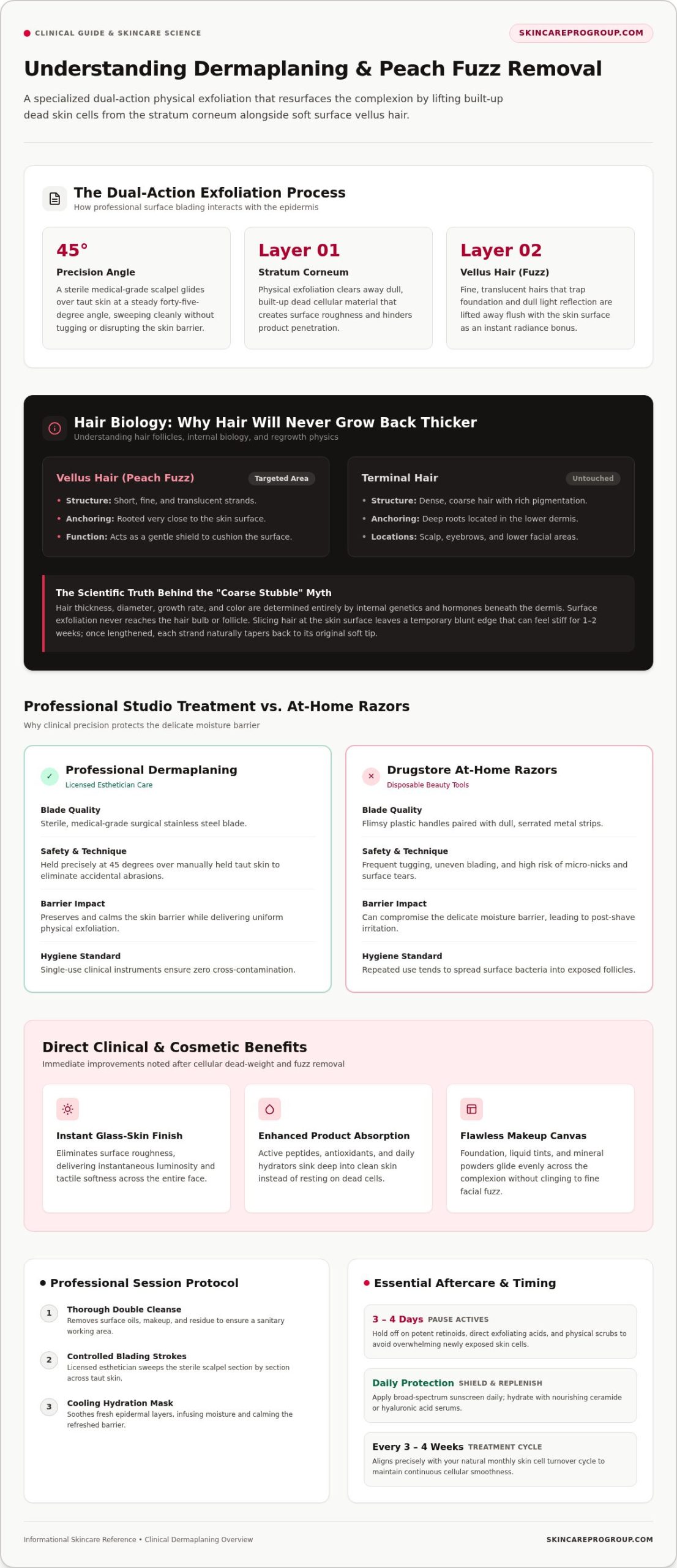
At its core, dermaplaning is a specialized physical exfoliation that gently resurfaces your complexion. During a professional treatment, a licensed esthetician glides a sterile, medical-grade scalpel across taut skin at a precise forty-five-degree angle. This delicate sweeping motion clears away built-up dead cells from the stratum corneum alongside fine surface hair. While Wikipedia explains the process of exfoliation across various clinical methods, dermaplaning delivers an instant dual-action benefit by smoothing cellular roughness while lifting away facial fuzz. Cheap at-home disposable razors often tug or cause micro-nicks, but professional studio blading skims cleanly without disrupting your delicate skin barrier.
To fully grasp what is dermaplaning peach fuzz removal, it helps to recognize the biological purpose of this hair. Known technically as vellus hair, this soft layer acts as a gentle shield to help cushion the surface.
Vellus Hair vs. Terminal Hair: Understanding Your Facial Hair
Your body produces two distinct hair types: fine vellus hair and dense terminal hair. Terminal hair grows on the scalp, eyebrows, and lower face in men; it possesses deep roots and rich pigment. Vellus hair is short, translucent, and anchored very close to the surface. When asking what is dermaplaning peach fuzz, clients often worry that cutting it will stimulate coarse regrowth. Surface blading never touches the underlying follicle or bulb beneath the dermis. Because your hair roots remain completely undisturbed, the treatment cannot alter hair diameter, growth rate, or cellular biology.
Does Dermaplaning Peach Fuzz Make Hair Grow Back Thicker or Darker?
The short answer is absolutely not. A common worry for anyone exploring what is dermaplaning peach fuzz is that clearing facial hair will trigger dark, stubbly regrowth. Scientifically, cutting surface hair cannot change its color or density. Hair thickness and pigmentation are controlled entirely by internal genetics and hormones beneath the skin, far beyond the reach of an exfoliating blade.
Why does this myth persist? When a blade slices vellus hair, it leaves a blunt edge across each strand. As these hairs re-emerge over the first week or two, that flat tip feels temporarily stiff under your fingertips. Once the hair lengthens, it tapers naturally back to its soft state. In their review of dermaplaning benefits and side effects, the Cleveland Clinic confirms that hair texture and shade remain completely unchanged after treatment.
Professional Dermaplaning vs. At-Home Shaving Razors
Drugstore razors simply cannot match clinical tools. Flimsy plastic handles and dull serrated blades frequently cause micro-tears, spread surface bacteria, and disrupt the moisture barrier. An experienced esthetician uses a sterile, surgical stainless steel blade held at a controlled angle across taut skin, preventing accidental abrasions. This precise physical exfoliation sweeps away buildup evenly while keeping sensitive skin calm. If you want silky skin without irritation, you can connect with our skincare team to plan a tailored treatment.
Key Skincare Benefits and What to Expect During Treatment
A professional session delivers an immediate glass-skin finish. By removing dull surface cells, dermaplaning allows daily hydrators to sink deeply rather than sitting on top of rough buildup. Foundation and mineral powders glide across the face smoothly without catching on fine hair. During treatment, your esthetician starts with a thorough double cleanse, works through gentle blading strokes, and finishes with a cooling mask. Medical experts note that hair will not grow back thicker or darker, giving you smooth results without unpleasant surprises.
Simple aftercare keeps your refreshed skin barrier calm and glowing. Pause potent retinoids, direct acids, and harsh scrubs for roughly three to four days post-visit. Shield your newly exposed cells with daily broad-spectrum sunscreen, and replenish moisture using gentle ceramide or hyaluronic acid serums.
Combining Dermaplaning with Professional Facial Treatments
For clients exploring what is dermaplaning peach fuzz removal, the true magic lies in pairing it with customized studio care. Combining manual physical blading with targeted anti-aging facials allows active peptides and antioxidants to penetrate unhindered for noticeable rejuvenation. Because healthy cell turnover follows a monthly cycle, scheduling sessions every three to four weeks preserves optimal smoothness. If you live in Frederick, Maryland, partnering with a dedicated esthetician ensures each visit protects your skin barrier while addressing your unique aesthetic goals.
Take the Next Step Toward Radiant, Smooth Skin
Understanding what is dermaplaning peach fuzz demystifies the treatment entirely. By pairing gentle physical exfoliation with clinical precision, you clear away dull cellular buildup and fine vellus hair without ever altering hair texture or regrowth patterns. Your daily hydrating serums penetrate deeper, makeup glides on seamlessly, and your complexion reveals a natural, lit-from-within glow.
Achieving these results safely requires experienced hands and intentional barrier support. Led by studio founder and licensed esthetician Jennifer, Skin Care Pro Group delivers customized facial treatments crafted specifically for sensitive and changing skin. Conveniently serving clients throughout Frederick and surrounding Maryland communities, our studio offers a calm, professional setting for your aesthetic journey. When you are ready for luminous skin, schedule your personalized skincare consultation to experience the difference expert studio care makes.
Frequently Asked Questions
Is dermaplaning painful or does it feel like getting scraped?
Dermaplaning is completely painless and feels similar to a light whisper or gentle brushing against the skin. Most clients compare the sensation to a soft scratch or a cat licking your cheek. Because a trained esthetician holds your skin taut while the sterile blade glides at a precise forty-five-degree angle, there is zero tugging, pulling, or discomfort during your studio visit.
Can dermaplaning cause acne breakouts or irritate sensitive skin?
Dermaplaning does not cause breakouts on healthy skin, though a blade should never cross active or cystic acne blemishes. Blading across active inflammation risks spreading bacteria and irritating sensitive skin. At our Frederick studio, Jennifer tailors every facial to individual skin conditions, carefully working around irritated spots or selecting alternative treatments to keep your delicate barrier calm and nourished.
How long do the smooth results of dermaplaning peach fuzz last?
For clients discovering what is dermaplaning peach fuzz, the silky, radiant results typically last between three to four weeks. This duration directly aligns with your natural skin cell turnover cycle. As new cells form, soft vellus hairs gradually return at their standard rate. Skincare enthusiasts visiting us from Walkersville and Hagerstown often book appointments monthly to preserve seamless skin texture.
What should you not put on your face after dermaplaning?
Avoid applying potent active topicals, rough facial scrubs, and heavy foundation for at least twenty-four to forty-eight hours after your appointment. Freshly exfoliated skin absorbs ingredients deeply, meaning retinoids, salicylic acid, and synthetic fragrances can provoke unexpected redness. Instead, treat your skin gently by sticking to soothing hyaluronic hydrators, lightweight barrier creams, and daily broad-spectrum sunscreen.