

What to Expect From a Chemical Peel: Your Complete 2026 Guide
What if the most effective way to reveal your best skin wasn’t about “burning” layers away, but rather supporting your skin’s natural ability to regenerate? Most people feel a bit nervous when they hear the word “chemical,” often picturing dramatic, red-faced scenes from old TV shows or worrying about weeks of hiding at home. It’s completely normal to feel hesitant about downtime or confused by the different types of acids available today. At Skin Care Pro Group, we believe that professional exfoliation should feel like a strategic investment in your confidence, not a scary medical event.
Understanding what to expect from a chemical peel is the first step toward achieving a smoother texture and reducing hyperpigmentation without the unnecessary stress. We’ve created this guide to walk you through the entire process, from that first tingle during your treatment to the final, healthy glow. You’ll learn about the reality of the 2026 recovery timeline and why modern, regenerative formulas are now the gold standard for skin health. We’ll also preview how a customized approach ensures your results are both visible and safe, so you can book your next session with total peace of mind.
Key Takeaways
- Understand the clear distinction between light and medium depths so you can select the treatment intensity that matches your specific skin goals and schedule.
- Gain a detailed breakdown of what to expect from a chemical peel appointment, including the physical sensations and the professional steps taken to ensure your safety.
- Learn why consistency is essential for long-term skin health and how a planned series of sessions delivers superior results for texture and tone.
- Discover how tailoring a peel within a Custom Facial allows for a more personalized experience that addresses your unique concerns more effectively than a standard procedure.
Understanding the Chemical Peel Process and Preparation
A professional chemical peel is a targeted exfoliation method that uses safe, acidic solutions to remove dead skin cells and encourage new growth. This process helps your skin shed layers that might be dull, damaged, or uneven. For a foundational Chemical peel overview, it’s helpful to know that these treatments have been used for decades to refine the skin surface safely under expert supervision. When you’re considering what to expect from a chemical peel, remember that the goal is always a controlled, healthy renewal rather than irritation.
Light vs. Medium Peels: Which is Right for You?
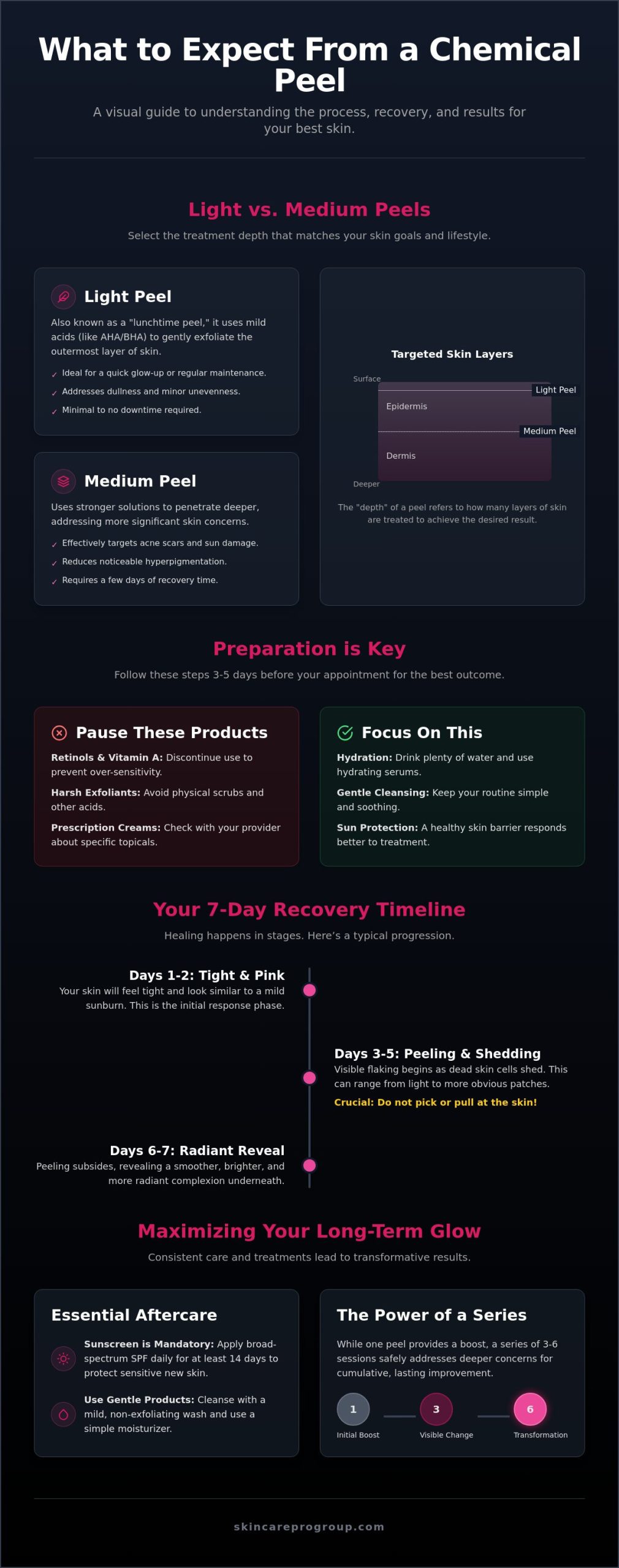
Light peels are often called “lunchtime peels” because they use mild acids like AHA or BHA to provide a quick glow-up. These are perfect for refreshing your look before an event or maintaining a clear complexion. Medium peels go a bit further, using stronger solutions to address more stubborn issues like acne scarring or noticeable sun damage. Depth refers to the specific level of skin penetration the solution achieves to reach the targeted concern.
How to Prepare Your Skin for a Peel
Preparation is just as important as the treatment itself. You should stop using retinols, prescription creams, or any harsh physical exfoliants at least 3 to 5 days before your visit. This prevents your skin from being overly sensitive when we apply the professional solution. Proper prep ensures the acids work evenly across the face.
Hydration plays a massive role in how quickly you’ll see results. In our local Maryland climate, seasonal changes can strip moisture from your skin, making prep even more vital. Whether it’s the humid summers in Hagerstown or the dry winters in Walkersville, keeping your skin moisture barrier intact ensures an even recovery. You can find more local advice in our Ultimate Guide to Spa Treatments in Frederick. A professional consultation is the final, essential step to check your skin tolerance and build a plan that works for you.
The Appointment Experience: What Happens During and After
The appointment experience in a boutique studio setting is designed to be both effective and relaxing. Unlike a clinical medical office, we focus on your comfort throughout the multi-step process. After a thorough cleansing and the application of a prep solution, the peel is applied to the skin. You should anticipate a warm tingle or a mild itchy feeling rather than actual pain. This is a normal part of What to expect during a chemical peel as the active ingredients begin their work. Once the session is complete, we neutralize the solution. You’ll likely leave with a healthy, sunburn-like glow and a feeling of tightness as the skin begins its transformation.
The 7-Day Recovery Timeline
Healing happens in stages. During days 1 and 2, your skin will feel tight and may appear slightly pink. This is the preparation phase. Days 3 to 5 are when the visible peeling usually occurs. This shedding can range from light flaking to more obvious patches. It’s vital that you don’t pick at the skin, as this can lead to permanent scarring or hyperpigmentation. By days 6 and 7, the peeling subsides, revealing a smoother and more radiant complexion as the skin barrier finishes its restoration. Understanding what to expect from a chemical peel recovery helps you plan your social calendar with confidence, and for those looking to bring that same self-assurance to their romantic life, Dating Explained offers expert matchmaking and coaching to help you navigate the dating scene with ease.
Essential Post-Peel Aftercare
Post-treatment care is where you secure your investment. Sunscreen is mandatory for at least 14 days because your fresh skin is highly sensitive to UV damage. You’ll also want to use a simple, gentle cleanser without any active acids or scrubs to avoid irritating the fresh cells. For a comprehensive look at how to protect your glow, check our guide on Pre & Post-Facial Care. If you’re ready to start your journey toward clearer skin, get in touch with our team to discuss your specific goals.
Maximizing Your Results with Professional Guidance
Achieving transformative skin results requires more than a single visit. While one treatment offers a refreshing boost, chemical peels are most effective when performed in a series of 3 to 6 sessions. This cumulative approach allows us to address deeper layers of the skin safely over time. Understanding what to expect from a chemical peel series is the best way to manage your expectations and your results. Seeking professional guidance on chemical peels ensures you receive a plan tailored to your specific biology rather than a generic procedure.
At our Frederick studio, Jen prioritizes a customized strategy for every client. By integrating these treatments into a Custom Facial, we can target persistent anti-aging concerns while maintaining your skin’s integrity. This local expertise is especially important given our Maryland climate, where seasonal shifts require adjustments to your hydration and protection levels. We often suggest Light Therapy as a soothing follow-up to calm the skin and enhance the recovery phase after a more intensive peel session.
Customizing the Peel to Your Skin Concern
We modify every treatment to match your unique concerns. For acne-prone skin, the focus is on clearing congestion and reducing inflammation. Mature or sun-damaged skin requires a different set of acids to stimulate renewal and even out tone. This ‘Pro’ Facial philosophy ensures that your Frederick skincare experience is both comprehensive and results-driven, moving beyond simple surface exfoliation to create real change.
When to See Results and Maintaining the Glow
Initial brightness typically appears within one week of your session. However, the most significant structural changes, such as improved collagen levels, take several months of consistent treatment to manifest. Understanding what to expect from a chemical peel helps you appreciate this long-term progression. If you’re ready to see real change in your complexion, book an appointment for a professional skin analysis to determine the best schedule for your goals.
Start Your Journey to Smoother Skin
Professional skin renewal is more than just a single treatment; it’s a strategic partnership between you and your skin. By understanding what to expect from a chemical peel, you’ve already taken the most important step toward achieving your aesthetic goals. We’ve explored how essential proper preparation is for a safe experience and why the 7-day recovery timeline is a natural part of the healing process. Remember that the most impactful results come from a series of sessions tailored specifically to your skin’s unique tolerance and needs.
Since 2018, Skin Care Pro Group has been serving the Frederick community with a focus on both clinical excellence and the comfort of a boutique studio. Jennifer, our lead esthetician, provides the personalized care you won’t find in impersonal medical clinics. Whether you’re looking to even out your tone or refine your texture, we’re here to guide you through every stage of the process with professional integrity. You don’t have to guess about your skincare results when you have an expert mentor by your side.
Ready to see the difference professional exfoliation can make? Book Your Custom Chemical Peel Consultation in Frederick, MD today and let’s create a plan that works for you. We look forward to helping you achieve that healthy, lasting glow.
Common Questions About Your Treatment
Does a chemical peel hurt?
You should experience a warm, tingling, or slightly itchy sensation rather than actual pain. Most clients find the process very manageable as the active solution works on the skin surface. We monitor your comfort level throughout the entire application to ensure the experience remains professional and safe. If you’re nervous about what to expect from a chemical peel in terms of comfort, know that your ease is our priority.
How much downtime is required after a chemical peel?
Downtime varies depending on the specific depth of the treatment you receive. Light peels often require zero downtime, allowing you to return to your daily activities immediately with a refreshed glow. Medium peels typically involve a three to seven day recovery period as the skin begins its natural shedding process. We’ll help you coordinate your appointment with your social calendar to ensure you feel confident during the healing phase.
Can I wear makeup after my chemical peel appointment?
It’s best to avoid wearing makeup for at least 24 to 48 hours following your session. Your skin needs this time to breathe and begin the renewal process without the interference of cosmetic pigments or heavy formulas. Once the initial tightness subsides and your skin barrier stabilizes, you can resume your regular makeup routine. Using clean brushes and gentle, non-irritating products is essential during this delicate transition period.
Will my skin actually peel off in sheets?
Visible shedding varies significantly from person to person and depends on the specific acid used. While some clients experience noticeable flaking, others might only notice microscopic shedding that looks like slightly dry skin. It’s a common misconception that your skin must peel off in large sheets for the treatment to be effective. The structural improvements are happening at a cellular level even if you don’t see dramatic physical peeling.
How often should I get a chemical peel for the best results?
We typically recommend a series of 3 to 6 treatments spaced about 4 to 6 weeks apart for the most significant results. This timeline gives your skin enough time to fully recover and regenerate between each session. Consistency is the primary factor in seeing long term improvements in texture, tone, and fine lines. During your initial consultation, we’ll establish a personalized schedule that aligns with your specific skin goals and tolerance levels.
Are chemical peels safe for dark skin tones?
Chemical peels are safe for dark skin tones when performed by a professional who understands the unique needs of melanin-rich skin. We use specific acids and controlled depths to avoid the risk of post-inflammatory hyperpigmentation or irritation. Understanding what to expect from a chemical peel as a person of color involves choosing a provider who prioritizes safety and uses a gradual approach to achieve visible results without compromising skin health.